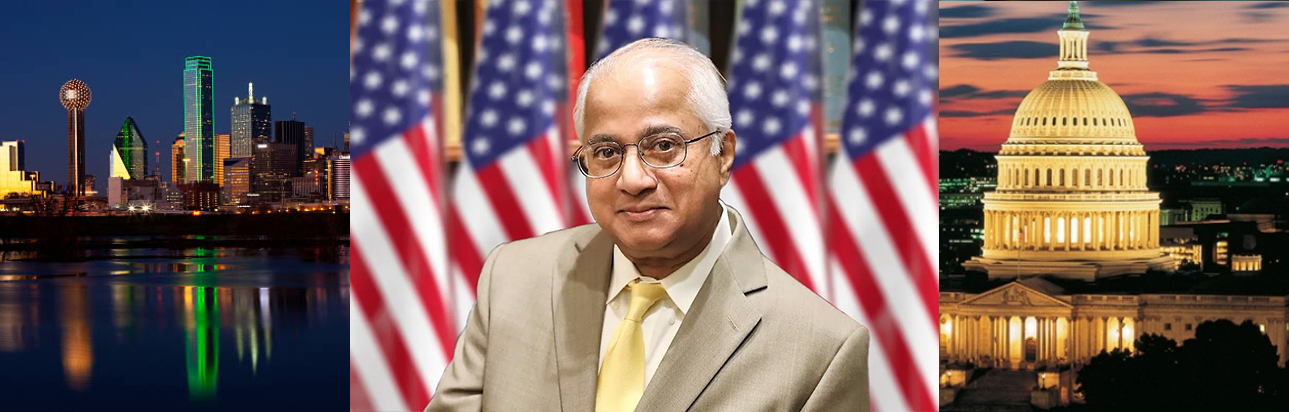
Ghouse honored by Religion Communication Council

      Comments Off on Ghouse honored by Religion Communication Council

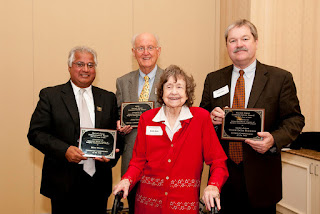
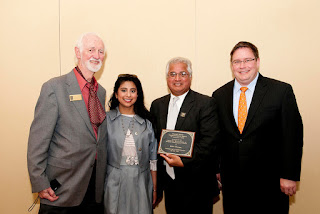
Ghouse was honored by RCC 13 years ago on April 16, 2009
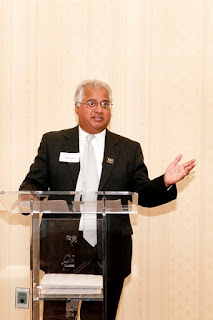
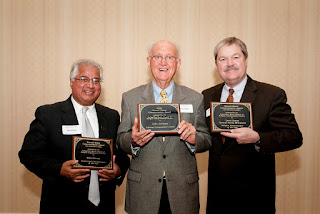
RELIGION COMMUNICATORS COUNCIL HONORS THREE DALLASITES.

Mike Ghouse accepts the recognition with humility.
Mike’s 5 Minutes Speech at the event
I want to thank the Religion Communicators council and Ms. Slater in whose husband’s name this recognition was initiated in 1929. I appreciate my friends for their support; particularly I want to thank Bill and Norma Matthews, Mary Ann Thompson-Frenk and John Shore with their presence. And I am pleased to congratulate the other two individuals who are recognized today;
– Religion Communicator of the year goes to a church or a religious organization or a person in such an organization effectively communicating faith values. (This year’s awardee is Larry James, Central Dallas Ministries)

– Communicator of the year is given to a secular/media organization or a person in such an organization that effectively communicates faith values. (This year’s awardee is Mike Ghouse)

– Lifetime Communicator of the year is presented to a person whose lifetime career has effectively communicated faith values. (This year’s awardee is John Lovelace) http://www.rcc-dfw.org/awards.html
Thank ya’ll again.

Living a Safe and Peaceful life is my responsibility, your responsibility and every one’s responsibility.
You cannot be safe as an individual or a nation when others around are not. It becomes our duty to consciously create better societies to live and let live.

Communication is the key for a successful relationship between family members, friends, associates, co-workers, and even an event like this. It is important to communicate the right message be it your business or world peace or religion.

So what is our role as religious communicators? I believe it is to mitigate the conflicts and nurture goodwill for peaceful co-existence of every one, indeed it is the un-stated purpose of religion, any religion; it is to mitigate conflicts and nurture goodwill among different peoples and nations.
Life and matter is about balance; every thing that came out of the big bang theory or through intentional creation seeks its own balance. Everything be it matter or life, has a built-in mechanism to seeks its own balance.

When it comes to matter, there is something that keeps the planets circumambulating around the Sun, that there is something that keeps the stars hung in a place. There is something that keeps the earth have its own precise balance. They are all put on a trajectory, they don’t have to think or work for the balance. Do we have a precise word to describe that ‘something’, for the sake of convenience and for a greater acceptance, can we call that ‘something’ a God?

Unlike the matter, human life was not put on a trajectory; we were not put on a plan to circumambulate around something, or hung in one place. We were given the freedom to create our own balance. Whether we believe in God or not, we still seek that balance.

Friends, God loves his creation just as each one of us loves what we create, be it the food we cook, the clothes we wear, the paintings we paint or sculptures we sculpt.

It is the love of the creator that gave each one of us, each community, each nation and each tribe a “formula” to live in peace within ourselves and with what surround us. He, she or it communicated that formula through the spiritual masters in the form of scriptures like Torah, Bible, Quran, Bhagvad Gita, Avesta and other scriptures including the oral traditions. Please remember, God has reached to every one of us and has offered that formula – to seek a balance for ourselves and a balance for what surrounds us; life and the environment.

God is about love, kindness and justice.

Hate is one of the few sources of disrupting peace in a society and it is our duty to track down the source of such hate and work on mitigating it. We have an obligation to maintain a balance in the society for our own individual good.

In your solitude, it is you who personally feels the anxiety, apprehension, fears or the joys of life for the actions you take in your life. Your Pastor, Pundit, Rabbi, Imam or Clergy are not responsible for it, even if they were; it is you who has to live with yourselves, so finding the truth is your own responsibility.

Prophet Muhammad once said to his associates that if some one uploads you with words that will cause you to have ill-will, malice, hate, anger towards other beings, you have to investigate before you believe, you should do your best to live a regret free life, you should not hate or pre-judge negatively any one without finding the truth.

We lose that balance when we let hate mongers, hate sermons and hate lectures creep in our societies, much of it is product of insecure men and it breeds arrogance. Arrogance that my way of life is superior or my religion is the only way to heaven. Arrogance is the source of most of the conflicts and much of the evil.

I am a Muslim and Islam works for me, just as Christianity works for you, Judaism works for you, Hinduism or other faiths work for you. And further I am humbled to say that my religion is not superior to others, that claim would be a sheer arrogance. There is a beautiful chapter in Qur’aan about it. http://quraan-today.blogspot.com/2008/07/sura-kafirun-un-believers.html

As religious communicators we need to explore and communicate that God has not signed up a deal with any religion behind our back, he just cannot do that. Let’s honor every tradition and faith whether they believe in one, multiple or no God. The essence of the creator and causer of the universe does not change with our beliefs.

Let’s learn to accept the otherness of other and respect the God given uniqueness of each one of the 7 billion of us, then conflicts fade and solutions emerge.

Thank you.Pictures from the event are at: http://www.flickr.com/photos/mikeghouse/sets/72157616859531207/show/

BIO OF MIKE GHOUSEMike Ghouse is a Speaker, Thinker and a Writer.

He is a frequent guest on talk radio and local television network discussing Pluralism, interfaith, Islam, India, Multiculturism, Terrorism, Peace, Politics and Civic issues. He co-chairs the center for interfaith inquiry of the Memnosyne Foundation and presides the Foundation for Pluralism. He is the president of World Muslim Congress a think tank with a simple theme: Good for Muslims and good for the world and vice-Versa.

His comments, news analysis and columns can be found on the Web sites and Blogs listed at his personal web site http://www.mikeghouse.net/ . He has authored over 600 articles on Pluralism, interfaith, Islam, India and peace.

His life mission is to open people’s hearts and minds towards fellow beings by mitigating conflicts and nurturing goodwill. He is a peace maker and an educator with two Master degrees and working on his doctorate in Psychology. He has two books on the horizon ; Basic Islam- everything you want to know about Islam and Pluralism, a text book on Pluralism 101. Mike is a Neighborhood Commissioner at the City of Carrollton, and a Board Member of Dallas Peace Center. He is an Ambassador for Peace for the Universal Peace Federation and a member of the International leadership council. He has initiated the annual events like the Annual Thanksgiving Celebrations in its 12th year, Unity Day USA in its 5th year, Holocaust and Genocides, event just finished its 2nd Annual event. Mike Ghouse Cricket Gold cup and several other initiatives were taken. He was Past President of Indian Creek HOA and North Texas Cricket Association and has been a member of several Boards.

Mike is a Dallasite for three decades and Carrollton is his home town.
Armed Anti-Muslim Protests: An Opportunity For Dialogue?

      Comments Off on Armed Anti-Muslim Protests: An Opportunity For Dialogue?

Many US Muslims are wary as armed anti-radical Islam protests were planned at over a dozen US mosques. Other Muslims see such protests as a rare opportunity to engage with skeptical Americans.

(AP Photo/Rick Scuteri)Anti-muslim and pro-Muslim protesters gather outside the Islamic Community Center of Phoenix, Friday, May 29, 2015. About 500 protesters gathered outside the Phoenix mosque on Friday as police kept two groups sparring about Islam far apart from each other.

By Patrik Jonsson Staff writer

Courtesy https://www.csmonitor.com/ Article Link : https://bit.ly/37nPL5n

Mosques in up to 20 US cities prepared for the arrival of armed “anti-mosque and pro-America” protesters on Saturday, raising concerns about potential violence amid heightened tensions over the growth of Islam in the US.

But at least one US Muslim saw the planned protests – dubbed the Global Rally for Humanity – as a “big opportunity” to build solidarity with Americans who have legitimate questions about Islam and Muslim culture.

Instead of “hiding,” US Muslims should openly engage with protesters at the mosques, even serve them water and “kosher hot dogs,” writes Mike Ghouse, a well-known moderate Muslim thinker and writer, in the Illinois-based The Arab Daily News.

Writing that immigrants to the US have always faced a “battery of tests” as they attempt to assimilate,  Mr. Ghouse points out that “inaction, isolation, retraction, silo-ing ourselves or hiding behind walls are not options for us; it simply prolongs the transition process and may inadvertently serve to intensify the sense of distrust that exists among a few.”

He adds: “This is a big opportunity and we have to do it right to bring about the needed change.”

The planned anti-mosque protests are the largest and most aggressive iteration yet of a new strategy by self-described “American patriots” who say they’re concerned about the march of radical Islam into the heartland. 

The protests have been organized through Facebook, some of which have restricted access. But it appears that protests will at least take place in Atlanta, Charleston, S.C., Dearborn, Ellicott City, Md., Florence, Ky., Louisville, Ky., Medford, Ore., Murfreesboro, Tenn., and Ocala, Fla.

In a Facebook post, organizer Jon Ritzheimer, an ex-Marine who has emerged as the leader of the movement, encouraged attendees to come armed “in case [protesters] come under that much anticipated attack.”

“I want warriors by my side,” Mr. Ritzheimer added.

According to the Southern Poverty Law Center, anti-Muslim rhetoric has increased in the US, exacerbated by political rhetoric ahead of a presidential election and the refugee crisis in Europe. The tensions come as the number of mosques in the US has increased from 1,200 in 2000 to more than 2,100 today, according to Hartford Institute for Religion Research.

“We’ve never had this many events targeting mosques in this kind of national way,” Heidi Beirich, director of the Intelligence Project at the Southern Poverty Law Center, said in a conference call last week. “This is widespread in a way that these things have not been before.”

Across the US, Muslims have been debating how to respond to the protests.

“In one of their emails, they said they were going to bring 3,000 people to Washington, D.C., in front of our mosque, and they instructed them to bring their weapons,” Ibrahim Mumin, director of community relations for Masjid Muhammad mosque, told USA Today. “Well, we consider that kind of a threat.”

The Council on American-Islamic Relations, the country’s largest Muslim advocacy organization, urged Muslim leaders to ask for police presence and to take video of protesters.

Other officials urged Muslims to, in essence, ignore the protests.

“As we have learned from experience in the past, the best way for the average person in our community to handle these incidents is to ignore them,” Dearborn Mayor Jack O’Reilly wrote Friday on the city’s website. “The demonstration is not really a forum for honest dialogue, and anything that intensifies emotions will only intensify conflict.

In his commentary for Arab Daily News, Mr. Ghouse disagreed with the Dearborn mayor. He pointed out other recent protests, including one in May outside a Phoenix mosque, where Muslims engaged in what he called a productive dialogue with Ritzheimer.

“While it may be tempting, as American Muslims, we should avoid viewing anybody as our enemy out to get us,” he writes. “While asserting our rights as American citizens, we will be well served by acknowledging that many citizens have questions about our faith and our books. As fellow Americans we should boldly address these questions and allay their fears. We have to come together as Americans and solve our problems together.”

Pamela Geller And Mike Ghouse Shouting Match

      Comments Off on Pamela Geller And Mike Ghouse Shouting Match

By Josh Feldman

Courtesy ttps://www.mediaite.com/ Article Link : https://bit.ly/3OurKKP

Sean Hannity tonight brought attention to Egyptians taking to the streets to protest the regime of President Mohammed MorsiPamela Geller and Mike Ghouse got into an angry, heated back-and-forth when Geller confronted Ghouse for claiming her New York subway anti-jihad ads were responsible for someone losing their life in the subway. She shouted at him, “How dare you accuse me of murder!”

After slamming President Obama for helping the Egyptian government, Hannity touted how he said from the very beginning that instituting a president with ties to the Muslim Brotherhood would turn out badly for Egypt. Ghouse said that it’s wrong for the U.S. to be aiding Egypt, and agreed that Obama should not be offering his support for the Morsi regime. He called Morsi a “bully,” Hannity called him an “Islamic extremist” (though Ghouse disputed the necessity of including the “Islamic” part).

Geller noted how Morsi fully believes that Obama will ultimately not side with the protestors, saying the American president is consistently “on the side of jihadic Islamic supremacist regimes” from Libya to Egypt. Geller also explained that she was banned from England for her outspokenness on these issues. She then confronted Ghouse about accusing her and her anti-jihad ads of causing the death of someone in the subway system, demanding an apology from him.

Ghouse refused to apologize, noting that last year he warned of the “dangers of those ads,” but Geller insisted that the ads said nothing about Islam, just about jihad and “savages.” Ghouse shot back, “You owe an apology to the people who you are hurting and saying bad things about it.” Geller countered, “You’re saying the truth hurts people, don’t you see how irrational your logic is?” She shouted, “How dare you accuse me of murder!”

Watch the video below, courtesy of Fox News:

Ramadan: Can Non-Muslims Relate?

      Comments Off on Ramadan: Can Non-Muslims Relate?

Dr. Mike Ghouse

This article is 2669 words long and is complete and comprehensive. It is everything you always wanted to know about Ramadan. Ramadan is also known as Ramzan in South Asia and Hari Raya Pauso in Indonesia, the largest Muslim country. About 50% of the world’s Muslims (800 million) live in South and Southeast Asia.

Whether you are an Atheist, Baha’i, Buddhist, Christian, Hindu, Jain, Jewish, Native American, Pagan, Shinto, Sikh, Wicca, Zoroastrian, or from any other tradition, you may feel a sense of connection with the spirit of Ramadan as you read through it.

There is a cause or a causer who created the universe to come into existence, sustain and recycle it, and the word for that causer is God in different languages (or faiths). There (she or it) cannot be different causers for the same universe. No matter how and what name you call upon him –he is one.

The physical aspect of the human journey from the sperm and an egg through death is programmed precisely. The formula is the same for all humans, and there is no such thing as a Christian, Jewish, Muslim, Hindu, or other genes.

When the universe came into being; the two main products of the process were Matter and Life. The matter functions precisely as designed, like the Sun, Jupiter, Earth or the Moon playing their part. On the other hand, humans’ interactions are not pre-programmed; they have complete freedom, guidance (religion), and intelligence to create their balance to live securely and in relative harmony.

Rituals are a part of every Religion

You may note that identical spiritual wisdom emerges in different parts of the world simultaneously. The best example is how a mother figures out what to do with her crying baby in the jungles of Amazon or Hollywood; she knows the child is hungry and needs to be fed.

Indeed, beauty is in the eyes of the beholder, and I would say faith is in the heart of the believer, and every religion is dear to its believer. Religion is like a mother who is dear to each one of us.

Religions were established to create cohesive societies where each one of the members of the community feels secure about their faith, race, ethnicity, culture, or other uniqueness.  Religion is never the problem; the individual who doesn’t get his religion is the problem.

Rituals of Ramadan

You may note that identical spiritual wisdom emerges in different parts of the world simultaneously. The best example is how a mother figures out what to do with her crying baby in the jungles of Amazon or Hollywood; she knows the child is hungry and needs to be fed.

Indeed, beauty is in the eyes of the beholder, and I would say faith is in the heart of the believer, and every religion is dear to its believer. Religion is like a mother who is dear to each one of us.

Religions were established to create cohesive societies where each one of the members of the community feels secure about their faith, race, ethnicity, culture, or other uniqueness.  

Religion is never the problem; the individual who doesn’t get his religion is the problem. 

RAMADAN IN THE LIFE OF A MUSLIMThe 9th month of the Muslim calendar starts with the Moon Sighting

Ramadan begins with the moon sighting! Here comes the politics of Ramadan. One group insists that they have to see the Moon themselves, while the other accepts if someone else has seen it. In the United States, most Muslims go by Nasa’s calendar so they can plan the festivities. However, it is a joy to wait and watch for the pencil-thin Moon to appear in the sky. Parents place their kids on their shoulders, and kids get excited to watch that Moon from the top of their parent’s shoulders.  

Chandni Raat 
 
When one sees the Moon or hears an announcement, they dash to the marketplace to shop and celebrate. It was initially a South Asian tradition but has become universal. It is like shopping for Dussehra, Rosh Hashanah, Christmas, and other festivities.  

Taraweeh: Special Ramadan Prayers 

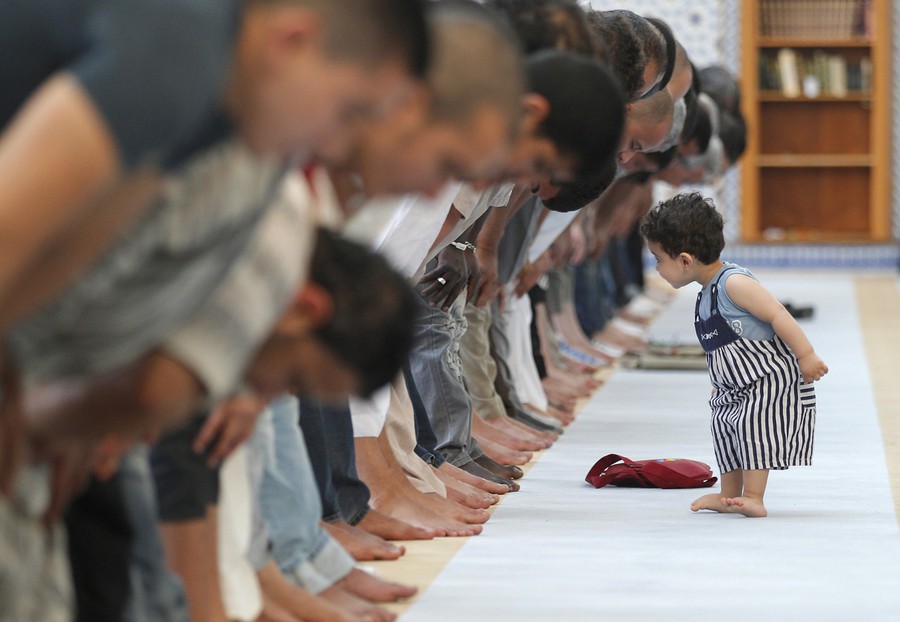
Muslims observe diverse practices – Special Prayers called Taraweeh are prayed in the late evening, followed by nightly prayers called Isha. Taraweeh is usually performed in a congregation, generally a Mosque. Typically, 20 to 22 units of prayers; some Muslims pray fewer, and some don’t. They complete reciting 30 chapters of the Quran in 30 days (or 29).

The Night of the Power known as Laylat al Qadr

Laylat al Qadr is also known as Shab-e-Qadr and is considered one of the mighty nights during Ramadan. It was the night God first revealed the words of the Quran and concluded and completed it in the last ten days of Ramadan over 23 years.

Shia Muslims consider the 19th, 21st, or 23rd of Ramadan the most critical nights, while the Sunnis and Ahmadiyya look up to the odd days in the third part of the month.

A TYPICAL DAY (Times are approximate)
 
 4:00 AM

The entire family rises in the morning, and together they prepare the food for Sahri/ Suhoor – the meal before fasting. 

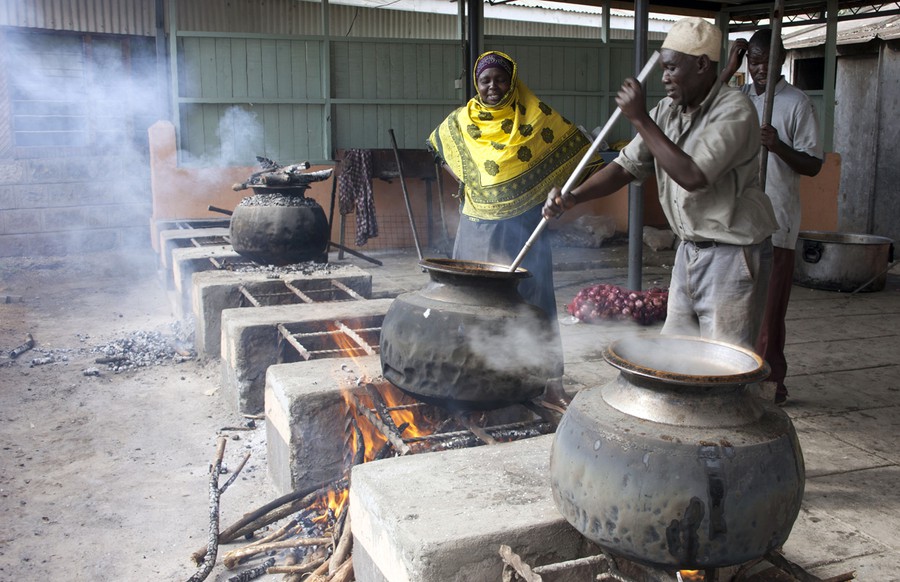
My family had a routine; I would chop the onions, my sister would flatten the dough to make Rotis (flatbread), one brother would wash the dishes, and the others would sit around and talk. My mother would sit by the stove (Chula), and my father would make sure all the ingredients were available. It is a family affair and brings families closer. 

Food habits vary from region to region; we made Rotis (Flatbread) with Subzi and Keema (minced meat) and capped it off with a good cup of tea or lassi. 

 
Depending on the tradition, the cut-off time to eat or drink is about 30 minutes before sunrise. We had to finish eating by 5 AM and say a short prayer for God to accept our fasting.

5:30 AM

Pray together or go to the mosque if it were near.  

6:00 AM
Sleep for a few hours (Ramadan only) and go to work. A few choose to study the Quran in a group called Halaqa. This is a month of reflection and connection with family members.
 
1:30 PM

The prayer in the afternoon is followed by the one in the late afternoon. One can pray individually, but a congregational prayer is a good option. Remember, it is about bringing the communities together. The Shia Muslims usually combine both the prayers and the Sunnis and Ahmadi do it one by one.
 
6:30 PM – IFTAAR

Iftar is breaking day-long fast.

Sunset – some follow the times prescribed for the evening, and some keep looking at the sky (if it is a clear sky) to see the sunset. 

A prayer call (Azan) goes out at sunset; while the Sunnis and Ahmadi Muslims take the first bite of the date fruit and sip some water, the Shias will wait until after the prayer.

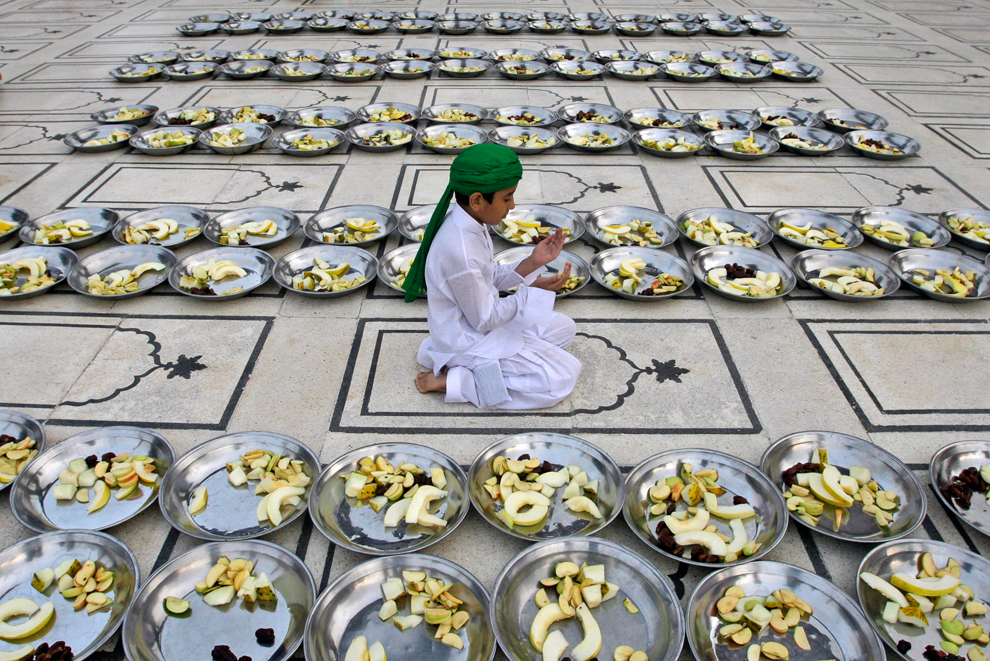
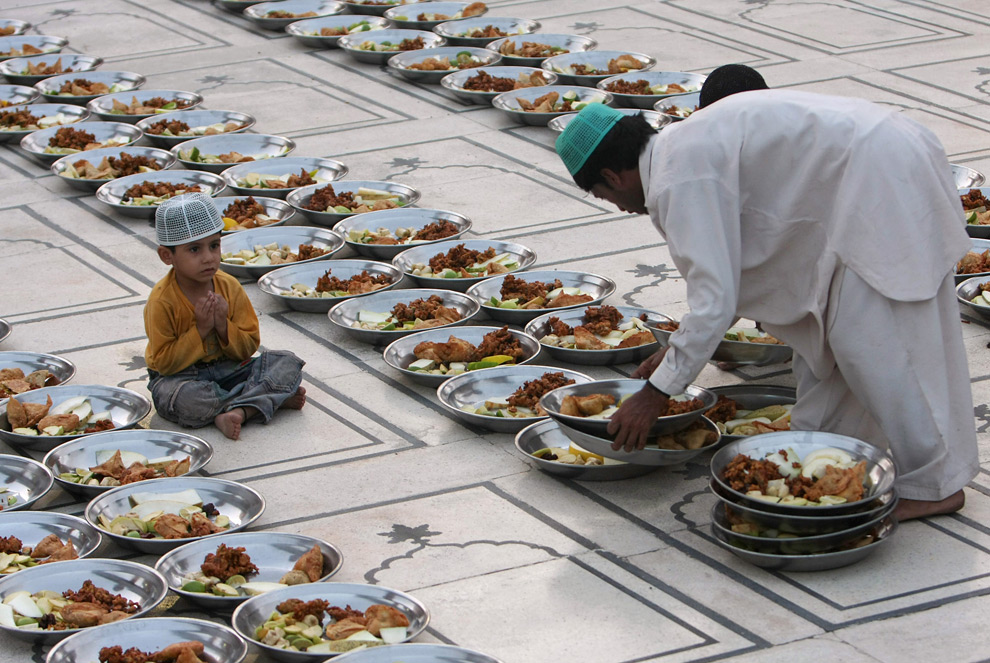
Since the observers have not had anything to drink or eat for the whole day, they will start with fruits and light snacks and let the stomach get ready for the entire meal after the evening (Maghrib) prayers. It is a thoughtful process.

 Did I tell you Muslims abstain from everything from water, food, ill-talk, ill-thought and ill-conversation, and every temptation that comes their way? Of course, I did. Fasting is a learning process to bring self-discipline. It is suitable for all, particularly for procrastinators, smokers, alcoholics, or any addictions or unpleasant habits. 

Iftar Parties 

Muslims invite their non-Muslim friends to join them for the Iftar parties. The parties are community-building events. An entire range of foods is available to eat. Indian Muslims offer vegetarian and non-veg foods (Hindu and Jain) to honor their guests.

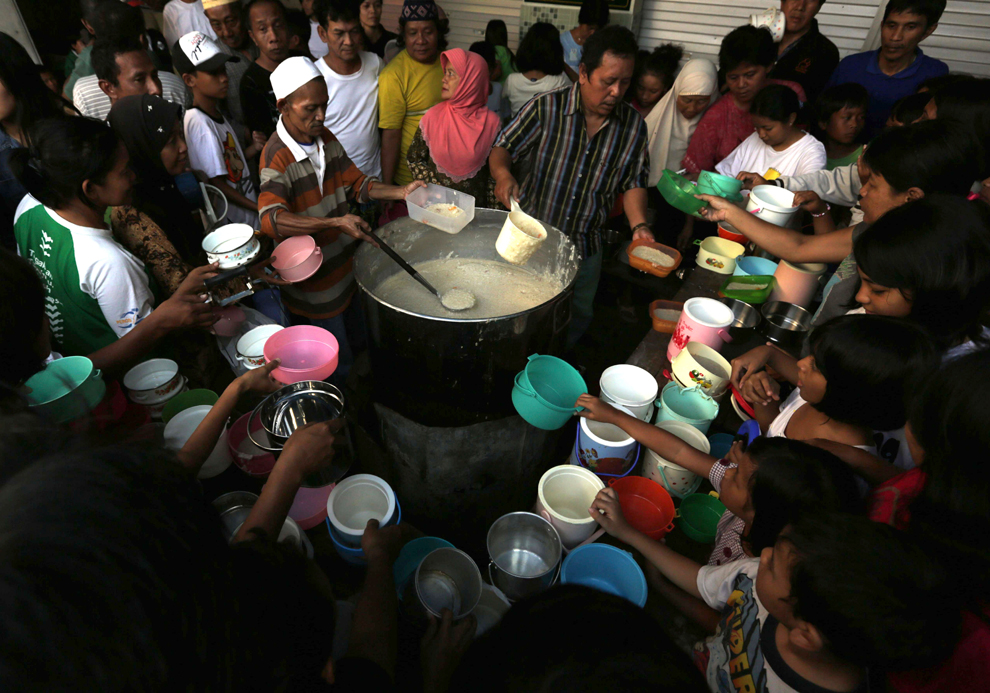
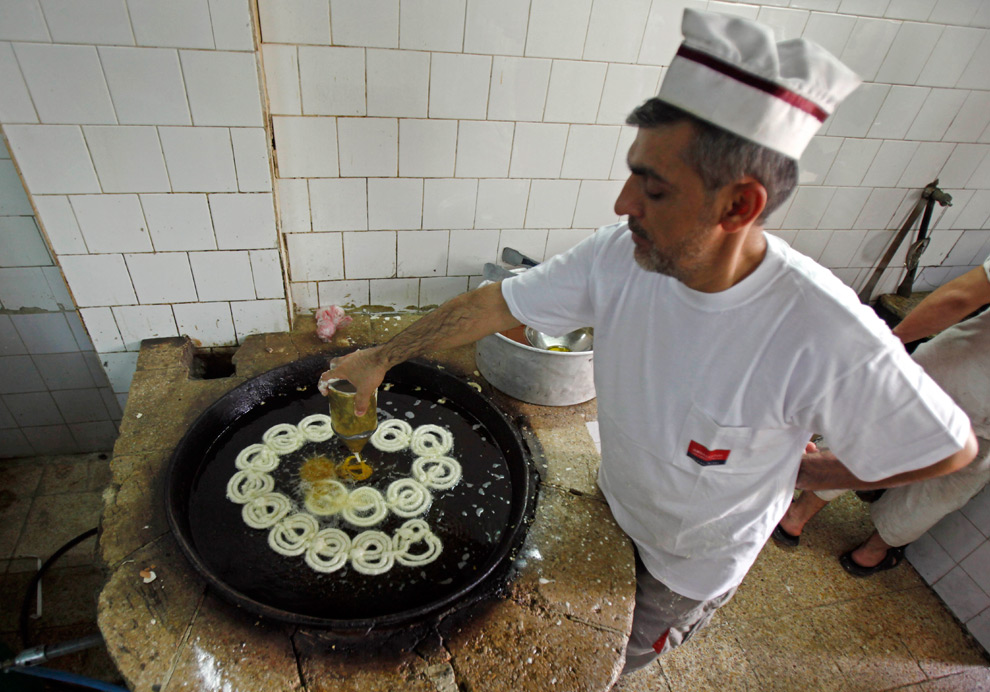
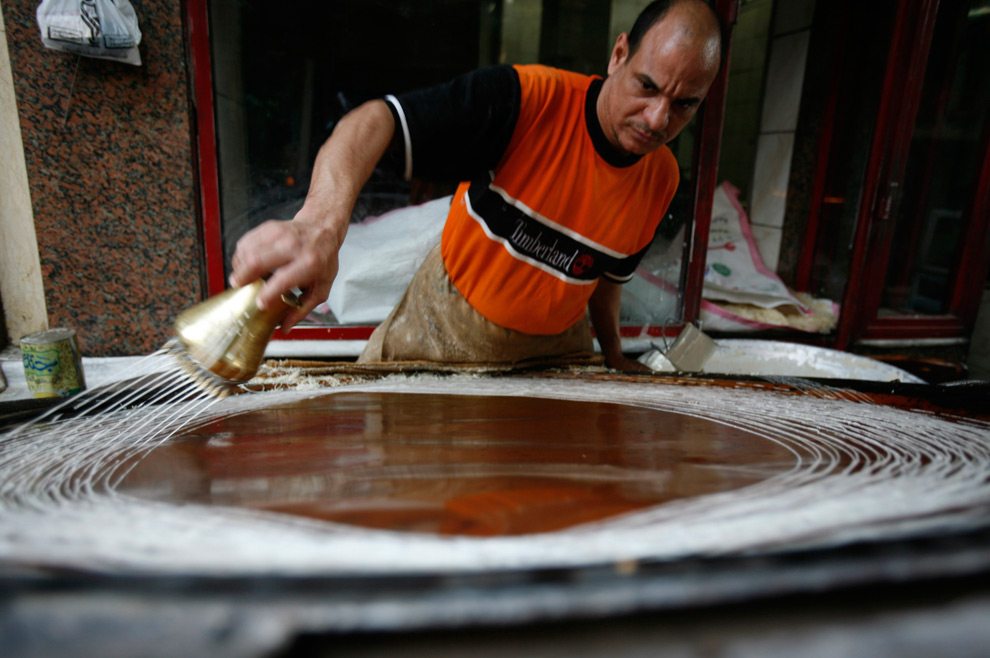
In a given Mosque, you will find Muslims from at least 20 to 30 countries, and as such, the variety of dishes increases by number. Biryani is the King of South Asian cuisine, and Naan, Keema, Korma, Rooh Afza, Sweet Lassi, Mango Lassi, and Gulab Jamun are on the plates. One universal item consumed worldwide is the dessert made out of vermicelli; the South Asians call it Seviyaan, and the Shir Khurma is very popular- it can be a drink or a soup.

Politicians and corporations also organize the Iftar parties. The tradition was started by President Bill Clinton and carried through President Obama, and we hope Biden will re-start it. 

 
8:30 PM Taraweeh Prayers (described earlier).

LAST DAY OF RAMADAN  
 

On the evening of the 28th as well as 29th everyone is out looking for that Pencil thin Moon again; once an announcement comes out, celebrations begin. Chand Raat (Moon Night) opens up, and people go shopping; it is like shopping on the last day of Christmas, Rosh Hashanah, Diwali, or other festivities. It is a good tradition of excitement and joy for successfully observing the entire month of Ramadan dutifully. 

Children and adults paint Mehendi (henna) on their hands with various designs. They look forward to it. Typically, new clothes are worn on Diwali. 

Zakat

Every Muslim takes out 2.5% of his/her wealth and passes it on to the needy. Most people pay in advance, but as usual, some pay on the last day, like we file our IRS tax returns on April 15th. Zakat is one of the five obligatory duties of a Muslim.. 

Eid- the big celebration

Everyone in the family gets up in the morning, and it is the dawn of a new era. Eat breakfast and go for the mass or congregational prayers, also known as Jamaat. Since a Mosque cannot accommodate all the people in the area, they rent convention halls or big banquet halls.

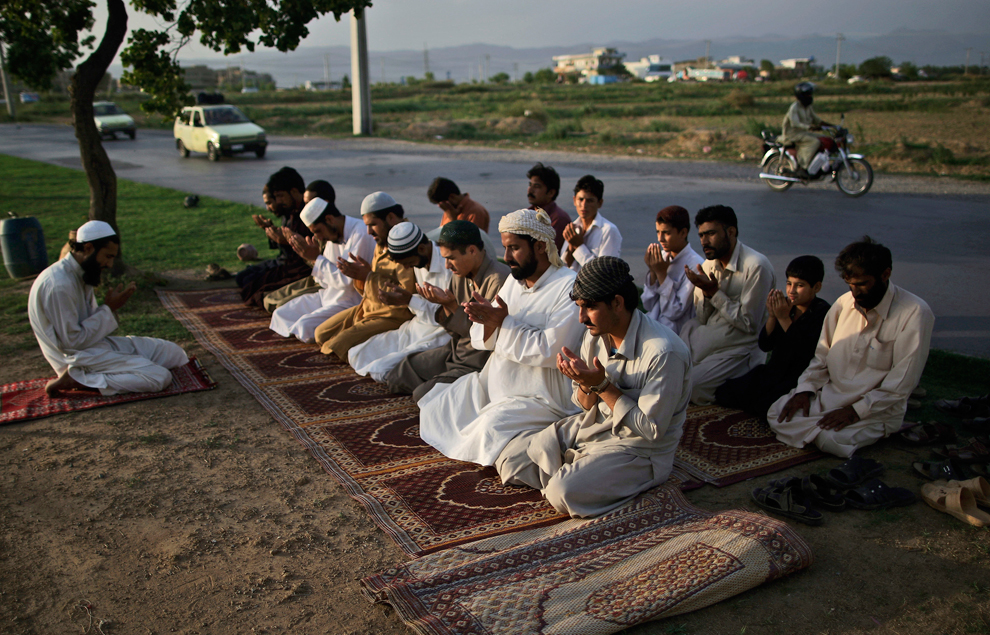
 Dallas, Texas, rents the Convention Center, where some 20,000 people gather for the congregational prayers. Yelahanka, my town, and perhaps in other places, they all go to the cemetery grounds, where they have a dedicated place made for Namaz (prayers). Generally, the Eid committee arranges the long mats to be spread on the floor, and some people carry their own personal prayer rugs. 

It is the day to celebrate and includes forgiving each other and starting afresh by hugging three times. My interpretation of the three is “forgive me,” “I forgive you,” and “Let us begin” the relationship afresh.

The Jains say “Michami Dukkadam,” meaning, let’s forgive each other and start the new year with a clean slate.

In the late ’70s, Amitabh Bachchan, Rajesh Khanna, Asrani, Mehmood, and other Bollywood actors participated in Eid prayers in Yelahanka, my hometown, a suburb of Bangalore. Mehmood lived a mile or two from the grounds and brought those movie stars to the prayers. The movie stars enjoyed the different ways one can worship the creator.

Praying for the deceased

It’s like Memorial Day, almost every Muslim visits the cemetery to pray for their loved one buried there. You will always find yourself connected to them. You can pray for them from anywhere, and on this day of joy, you feel their absence even more. 

EIDI

It is a gift you generally present to kids and family members as we do during Christmas, Diwali, and other holidays. Traditionally the head of the household, man or woman, presents the gifts to the family members; it is usually cash to spend. During my childhood, my father gave me one Anna (like 25 Paise), my friend and I dashed to the store behind our home and drank Orange Soda which was half Anna. That was the greatest pleasure we had.

Eid Parties 

It is usually an open house for families, friends, and community members to visit for lunch. A typical family visits at least three homes and of course the practices vary from Muslim to Muslim.
 
Exceptions: 

Fasting is exempt for individuals with diabetes and other difficulties, pregnant women, and even people traveling. If you miss it, you have the option to make it up.

 Prophet Muhammad (PBUH) said that God has no need for the hunger or thirst of someone who hurts others, violates their dignity, or usurps their rights. The fasting of the limbs must match the fasting of the stomach. The eyes, ears, tongue, hands, and feet all have their respective fasts to undergo. For example, the tongue’s temptations — lies, backbiting, slander, vulgarity, and senseless argumentation — must be curbed to maintain the integrity of the fast.

The consciousness of behavior and vigilance over action are the most profound dimensions of fasting: the heart’s fasting focuses on the attachment to the divine. Ramadan becomes a source of peace and solace, just as Christmas, Rosh Hashana, or Dussehra go beyond the rituals to bring forth kindness, charity, and caring.

True fasting is self-purification. From this comes a rich inner life that brings about values such as justice, generosity, patience, kindness, forgiveness, mercy, and empathy — values that are indispensable for the community’s success.

Knowing about hunger is different from knowing it. Empathy is not an intellectual equation; it is a human experience. Our hardness of heart often springs from our distance from the human condition of others. The poor, sick, disenfranchised, oppressed — we rarely walk a mile in their shoes, not even a few steps. “Rest assured,” cautioned one teacher, “if you do not taste what it feels like to be hungry, you will not care for those who are.”

Ramadan will come and go with such stealth; what do we value, and why? We can change our habits and customs, including obsessive behavior, in the face of a higher calling.

Fasting imparts a sense of what it means to be truly human. Its observance reflects its universality in Baha’i, Buddhist, Christian, Hindu, Jain, Jewish, Sikh, Zoroastrian, and other faiths. For fasting to be truly universal, its benefits must extend beyond the fraternal ties of Muslims and must extend to forging a common humanity with others. 

Let the spirit of Ramadan develop an understanding and respect for each one of God’s creations – that is, all of humanity.

The most common greetings of the Ramadan festival are Ramadan Mubarak, Eid Mubarak, and Ramadan Kareem, and then there is variation depending on the language you speak.

Picture’s courtesy – Boston Globe and the Atlantic

Dr. Mike Ghouse is Social Scientist, Public Speaker, thinker, author, newsmaker, and an Interfaith Wedding Officiant. He is deeply committed to Pluralism in Religion, Politics, Societies, Human rights, and religious freedom. He is the founder and president of the Center for Pluralism, Director at the World Muslim Congress, a think tank, and a wedding officiant at Interfaith Marriages. His new book American Muslim Agenda is available on Amazon, and “Standing up for others” and “Madame President” are coming soon. He is committed to building cohesive societies and offers pluralistic solutions to issues of the day. His mission is to open people’s hearts and minds toward fellow humans.  More about him at TheGhouseDiary.com

 # # #

Mahavir Jayanti

      Comments Off on Mahavir Jayanti

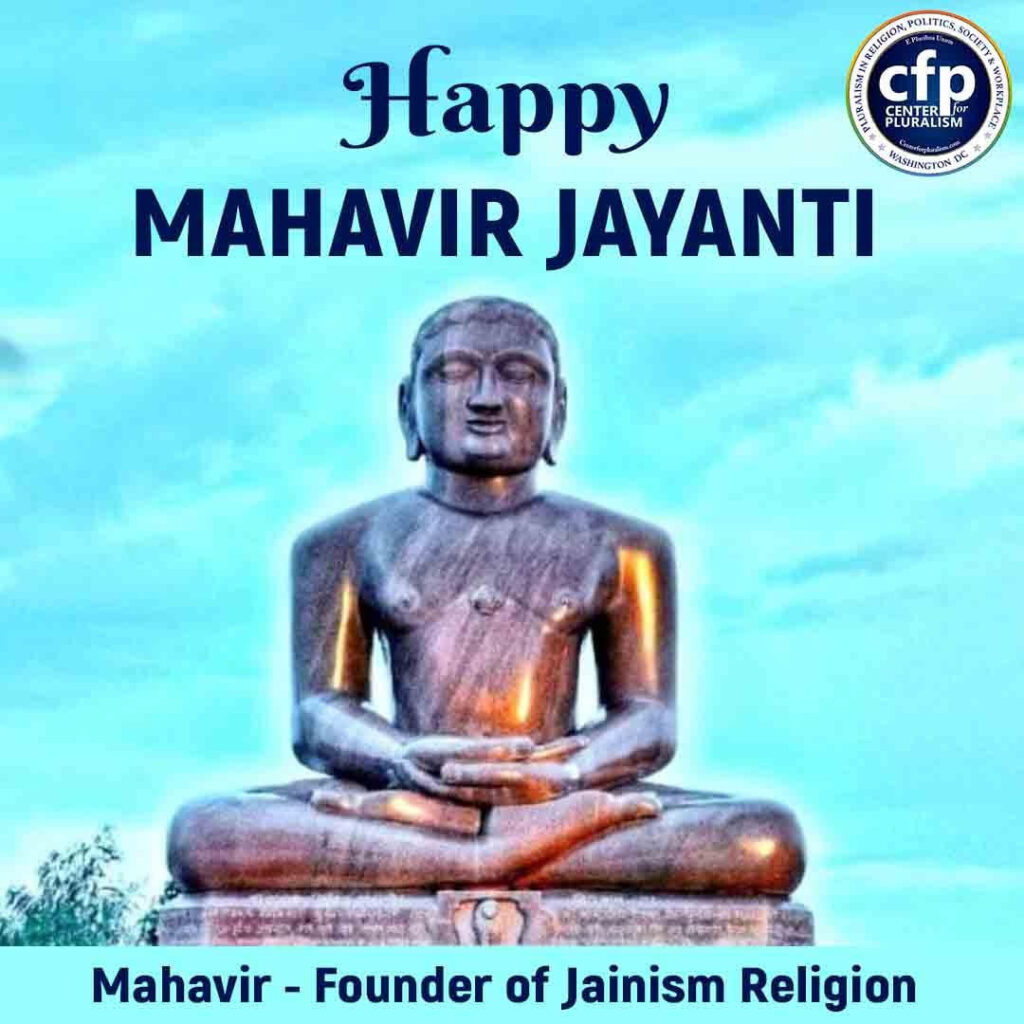
April 14, 2022 — Today is Lord Mahavir’s birth celebrations, Mahavir established Jainism, a world religion, and his birthday (Jayanti) is celebrated worldwide by the Jain community in memory of the last spiritual teacher of Jainism. 

He was born in 599 BC, at Kshatriyakund, Bihar, India, on the 13th day of the bright half of the moon, in the month of Chaitra. He was the 24th and the last Tirthankar (teaching God who preaches dharma – righteousness).

He was born to King Siddhartha and queen Trisala; Mahavir was named Vardhaman by his parents. He was born into a royal family, but royalty and the luxurious life did not please him. He was in constant search of inner peace and spirituality.

In his early years, Vardhaman developed a deep interest in the core beliefs of Jainism and started meditating. He led an ascetic life, and for more than twelve years, he practiced rigorous penance and profound austerity before attaining ‘Kevala Jnana’ or omniscience. At 30, he renounced the throne and his family to seek spiritual truth.

Principles of Lord Mahavira

According to him, to live a righteous life, one should follow the following principles: 

  • Nonviolence (Ahimsa): cause no harm to the living beings
  • Truthfulness (Satya) to speak the truth
  • Non-stealing (Asteya) not to possess things that do not belong to you
  • Chastity (Brahmacharya) not to indulge in sensual pleasures
  • Non-attachment (Aparigraha) not to get attached to material things.

His teachings are the main pillars of Jainism, also known as ‘Jain Agamas.’

“Festivals of the World” has been an educational series since 1993. The source of conflicts between us emanates from the fact that we don’t know each other; whatever we have learned about the other is harmful myths. The solution? When we live in the same street, communities, cities, and the same nation as neighbors, we might as well learn about each other. The best way to build cohesive societies is for its members to participate in festivities and commemorations of each other or at least understand each other’s joys and sorrows. 

Compiled from different Sources

Mike Ghouse 
www.CenterforPluralism.com  

Desi interfaith Marriages Are Free in America

      Comments Off on Desi interfaith Marriages Are Free in America

By Arun Kumar

Courtesy https://www.americanbazaaronline.com/ Article link : https://bit.ly/3JHmPCi

Growing up without filters of religion, nationality, race, or ethnicity, couples of South Asian descent marry for only love

Ishq par zor nahīñ hai ye vo ātish ‘ġhālib’
Ki lagāe na lage aur bujhāe na bane

Love is not in one’s control, this is that fire roused
It cannot be willed to ignite, nor can it be doused

So wrote Mirza Ghalib, India’s legendary Urdu poet, about one of the most powerful human emotions.

Amid a lot of hue and cry about interfaith marriages in India, particularly Muslim men marrying Hindu women, with some states enacting controversial anti-conversion laws, Desi Americans are proving him right.

While there are no restrictions from the state, desi American parents used to arranged marriages back home in India do go through a difficult time when their children find their own mates that too from a different religion, says Mike Ghouse, President Center for Pluralism.

A speaker, thinker, author, community consultant, pluralist, activist, newsmaker, and interfaith wedding officiant, Ghouse has dedicated his life to building a cohesive America and offers pluralistic solutions to the media and the policymakers on issues of the day.

Read: 4 out of 10 marriages in the US are inter faith (May 12, 2015)

In America’s socially open environment, children go to schools together and fall in love with their classmates, or meet them at the workplace and fall in love with them and want to marry them, Ghouse says in a conversation with the American Bazaar.

“In last decade I have officiated nearly 200 weddings from people of different faiths and nationalities, several of them went smoothly,” he says. “But some of the parents were adamant that they will not accept a Hindu boy, Muslim girl or a Jewish, Christian or a Sikh spouse.”

“This happens even with single or divorced adults in their 40’s and 50’s. But in every case, we had a fruitful conversation, and finally, everything comes together for the happiness of their children.”

Two in five Desi Americans marry outside their faith, that is marrying with a Hindu, Muslim, Christian, Jew, Sikh, or the other that includes even hard-core atheists, notes Ghouse citing a Pew survey.

“What is good about our kids is they don’t have filters like religion, nationality, race, or ethnicity,” he says. “They go to school, work together and fall in love with each other.”

“The ultimate to their relationship is marriage,” Ghouse says. “They do not consider religion a barrier having found freedom that they did not get in their mother countries.”

The American young men and women, are independent, and unlike their parents, they are open-minded, and have no barriers between them and another person, he says.

The question of religion does not arise with them, but it becomes an issue with many parents of South Asian origin, be they Hindus, Muslims, Sikhs, Christians, or others, according to Ghouse.

“They worry about what their friends and relatives back home would say, but do not worry a bit about how their children would feel.”

A few parents, Ghouse says have voiced frustrations like, “I raised my girl with good religious education, she was observant of all the rituals and traditions we followed, and I cannot believe she chose to go with this guy from another faith.”

Read: Three US lawmakers express concern over religious freedom in India (July 16, 2021)

“The parents on both sides, make subtle to blatant efforts to ask the bride or the groom to convert to their faith,” says Ghouse.

“They pursue this relentlessly no matter how many times their kids say ‘No’ to them, then finally they beg to at least have their name change to suit their faith.”

“A few of them yield to such demands, provided there is no record of the temporary name anywhere, lest their family members and their friends back in India make a ruckus about it.”

Hindus and Muslims from South Asia go to extraordinary lengths to come to America, notes Ghouse. When they come here, they contribute to the well-being of America free from religious tensions.

But that freedom is still reserved when it comes to marriages between Hindus and Muslims. Invariably, the parents hassle their children about marrying a Muslim or Hindu, he laments.

However, it mainly happens with the new immigrants while the parents who came here several decades ago cherish and celebrate the marriage of their children whether they marry a Hindu, Muslim, Christian, Jew, Sikh, or any other, says Ghouse.

They want their children to be happy and trust their children with their decision, while immigrant parents don’t trust their adult children and hassle them endlessly, he says.

“When a couple is deeply committed to marrying, they go ahead and get married any way but sorely miss out on the ceremony,” writes Ghouse, who runs Interfaith Marriages, an organization that helps the parents and the couple with such unions.

“Over the years, I have seen too many couples miss out on the joy of that additional sense of completeness that comes with a religious tone in the ceremony,” he writes on the website http://interfaithmarriages.org/.

“Marriage is between two individuals, and their families and friends ought to be supporters and cheerleaders to celebrate and complete their joy,” Ghouse says.

“When we officiate a wedding, we work with the couples and the parents to ensure the wedding goes smoothly and everyone is on the same page, that is to cheer the couple.”

Ghouse shares his experience, “Invariably, I get to mediate between difficult parents and their kids once in a while. A Christian father disowned his son for choosing to marry a Hindu girl. He insisted she converts or else he would not attend the wedding.”

“After serious negotiations, I offered to invoke the name of Jesus in the ceremony, but without conversion, the father was not sure. He came to the wedding but stayed outside and peeked from the slightly opened door,” he said.

“When I concluded the ceremony by invoking the name of Jesus, he barged in, hugged me, and gave a hug to his son and even daughter-in-law. It was a joy to see the family unite in the marriage,” Ghouse recalled.

Religious men and scholars, he says need to understand that religion is personal and each religion serves the purpose it is designed to, to make one a good citizen.

“The idea of conversion assumes that the other’s religion is less than yours, which is a deficiency in understanding the purpose of religion.”

“However, people should always have the freedom to choose a religion that suits them. All are good religions,” says Ghouse. “Please remember individuals marry each other and not the religions.”

“Why does everyone in the world want to come to America?” he asks noting “America offers prosperity and the ability to be who you want to be. The religious freedom provided here should be a model to the world.”

Read: Interfaith marriage is common in U.S., particularly among the recently wed (June 2, 2015)

“The Americans are not afraid of people choosing any religion they want, as nation-building and prosperity come from working together and respecting otherness of the other,” Ghouse says.

“The world has followed the leadership of America in most aspects of life, be it science, medicine, innovation, information technology, artificial intelligence, and to a greater degree, her culture.”

Ghouse is of the view that if other nations follow America’s religious freedom model too, they can be as prosperous as America.

“Interfaith Marriages are the antidote to divisiveness,” says Ghouse. “They significantly contribute to the idea of one nation. When people are free from tensions and religious conflicts, they focus on building the nation, contributing their best to the workplace, and enjoying a meaningful life with their families. It is good for everyone.”

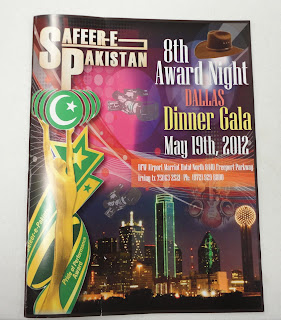
IMO Foreign Editor Mike Ghouse Presented Safeer-E-Pakistan Award By Geo TV For Interfaith Outreach

      Comments Off on IMO Foreign Editor Mike Ghouse Presented Safeer-E-Pakistan Award By Geo TV For Interfaith Outreach

IMO News Service

Mike Ghouse, the only Indian American, was among 15 Dallasites who were recognized for their contributions to the society at a gala event organized by Safeer-e-Pakistan, a popular community program that airs on Geo Television Network. The 8th Annual Dinner event was held at DFW Marriott Hotel by the Airport on Saturday, May 19, 2012.

Those who were presented Safeer-e-Pakistan Award, included Aslam Khan, Dr. Akhtar Shah, Amina Ismail, Asad Rehman, Dr. Amir Suleman, Mike Ghouse, Barkat Basaria, PSNT, Haleema Rahim, Dr. Basheer Ahmed, Mansoor Shah, Anwer Azam, Sakhia, Dr. Huma Shah, and Dr. Mohammad Nawaz.

The Safeer-e-Pakistan Award is a fulfillment of the vision of its founder Waqar Ali Khan, “to provide a platform for the Pakistani American community to voice their concerns on issues of importance to them”. Since 1997 the program has been introducing role models in different spheres of American life. In the 20 minutes video presented at the program, it highlighted its work over the years, and was quite impressive.

Mike Ghouse, who is also associated with IndianMuslimObserver.com as Foreign Editor, said in his acceptance speech: “As a Dallasite, Indian American, and a pluralist,  I welcome the spirit of the program. The recipients were Pakistani-Americans as well as one Indian American. This is a good step forward by the Pakistani community on a national level to reach out to Pakistanis from around the nation. We welcome Safeer e Pakistan to Dallas, indeed we are a model Desi community in America. We have been blessed with multi-cultural and multi-nationalistic efforts in bringing people together. We have been doing this for a long time, starting with Desi Thanksgiving Celebrations, Asian News Magazine, Asian News Radio, Asian Chamber of Commerce, FunAsia Radio, Asian American Star, Radio Hot Pepper, Radio Azad, B Magazine and several others.” 

Dr Mike Ghouse

“Despite being Americanized, we still have a few loud mouth Indian and Pakistani immigrants who do, and say things to hurt the delicate relations,  but gleefully do back flips to befriend Taiwanese, Mexicans, Russians, Japanese, Egyptians, Somalis or Brazilians, but resist befriending our own neighbors. They are deprived, and do not have anything good to say about the others, I pray for their enrichment. We are not alone in this short-sightedness; the Chinese-Taiwanese, Iranians-Saudi, North-South Korea, Israeli-Palestinians and others join us in our deficiencies, it is indeed human, but it is also human to build cohesive societies where no one has to live in fear of the other. If we are incapable of cleansing ourselves with prejudices against each other, then we should not expect the people back home to do it either. The spirit has to be global. It is in this spirit, I appreciate the work of Safeer-e-Paksitan program and the awards night. As a Pluralist, it is a joy for me to witness races, nationalities, religions and ethnicities fall the barriers between peoples and embrace each other. In the interfaith weddings that I officiate, the latest ones being a Muslim-Jain and a Hindu-Christian weddings, I share this, “What the bride and groom have chosen to do, must be admired by one and all. In this divisive world, where people have difficulty in agreeing or getting along – they are setting a new standard. That is learning to respect the otherness of other and accepting the God given uniqueness of each other. They have additional differences; they both grew up in different religious traditions,” Mike Ghouse said.

Mike Ghouse also expressed his thanks to Geo TV, Waqar Ali Khan, Fatima Khan, Anjum Anwar, Naheed Raheel and Safeer-e-Pakistan team for adding the interfaith category in the recognition.

He said in his acceptance speech that pluralism and interfaith is our future, by the end of 2020, there will not be a major city in the America, and perhaps in the world, where you will not find people of different faiths working, eating, and doing social things together. We need to prepare ourselves for those situations to prevent possible conflicts and lay a good foundation for nurturing goodwill. Exclusive communities will become a thing of the past.

“Guess who pioneered the interfaith? Indeed, it was Prophet Muhammad, the peace maker. He was perhaps the first spiritual master who was blessed to have lived amidst three to four different religious traditions. He lived his preaching, just as Moses, Krishna, Buddha, Jesus, Nanak, and all the great teachers did. He had regular meetings at his Mosque with Jews, Christians and others to discuss and learn and share about each other’s religions. He was following the words of Qur’an 49:13 (paraphrase) – the best among you is the one who makes an effort to know each other. There is a presumption that we don’t know each other, and most certainly we don’t. By knowing and learning and accepting each others as we are, we can create better societies – the product was the Madinah declaration initiated by the Prophet, where all people had their own religion to follow and practice without interference, it is almost a predecessor to the U.S. Constitution guaranteeing freedom of religion.  Of course, there will always be a tiny fraction of a percent of Muslims, Jews, Christians, Hindus and other who do not follow their own religion resulting in conflicts and false propaganda, but a majority of the people get the goodness of their religion. Example after example, we can trace the essence of his work – conflict mitigation and goodwill nurturance, and respecting the otherness of others. The recognition of interfaith work is owed to Prophet Muhammad and I thank Safeer-e-Pakistan for honoring the work of the Prophet,” Mike Ghouse concluded.

About the Author

Posted by Indian Muslim Observer on May 25, 2012. Filed under FeaturedForeignInterfaith RelationsLatest NewsMediaMike GhousePeoplePhoto Gallery . You can follow any responses to this entry through the RSS 2.0. Feel free to leave a response

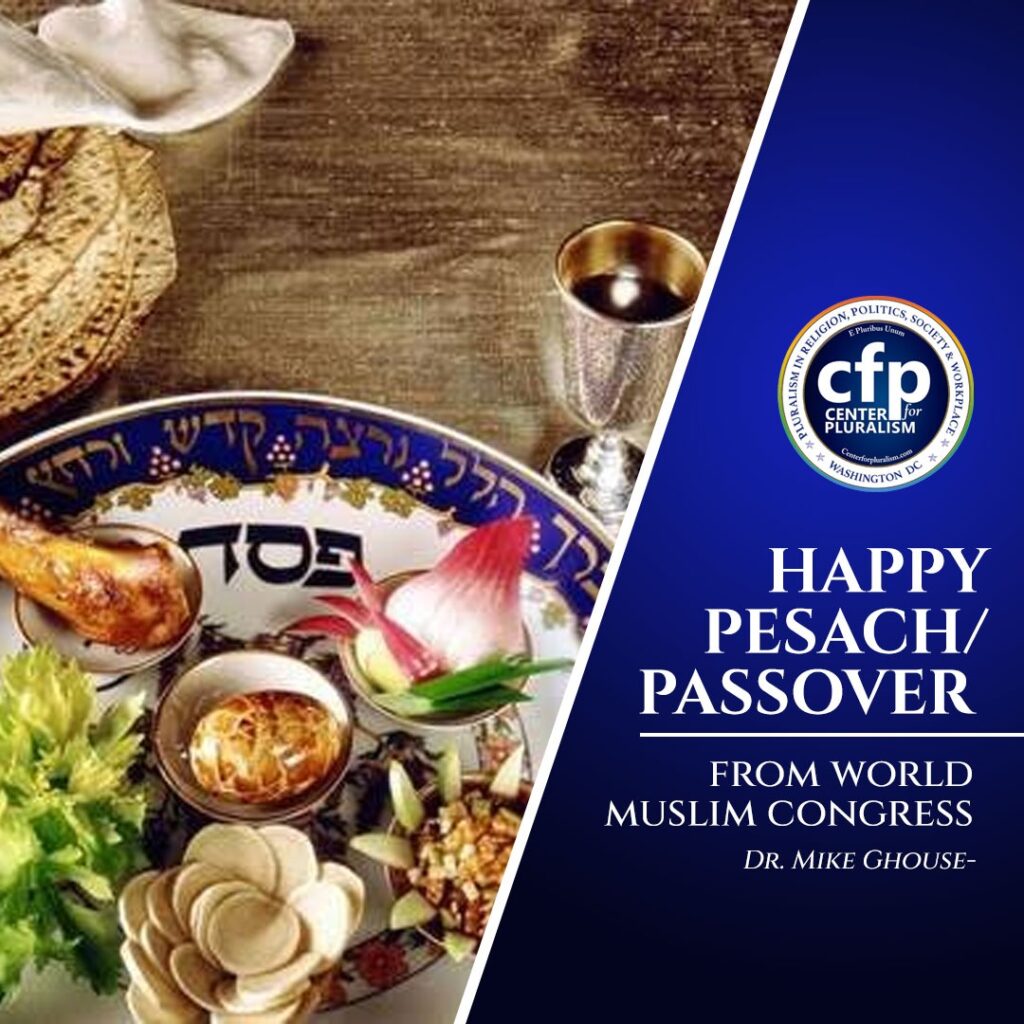
Happy Pesach/ Passover

      Comments Off on Happy Pesach/ Passover

The essence of Passover (in Hebrew, Pesach) is for Jews to remember their history as enslaved people in Egypt, resolve never to be a part of taking advantage of the less fortunate, and stand up to all modern forms of subjugation.  

As G‑d was poised to take the Israelites out of Egypt, He instructed Moses to tell the people of Israel to prepare by bringing a lamb into their homes. On the night of death upon the Egyptians, the Israelites slaughtered the lambs and ate them with matzah and maror.

They were also instructed to take the lamb’s blood and smear it on their doorposts, a sign to G‑d that this was an Israelite home to be “passed over” while death visited upon the firstborns in all other houses.  

 Passover (AKA Pesach) is the springtime holiday observed by Jewish people everywhere and lasts for eight days (seven days in Israel). No bread, or anything containing grain that has fermented, is to be consumed or even owned.

On the first two nights (one night in Israel), a special feast, a Seder, is held. The highlights of the Passover Seder are:

  • Retelling the miraculous story of Exodus
  • Eating matzah (a flat, cracker-like food) and maror (bitter herbs)
  • Drinking four cups of wine

The English word “Passover” is a translation of the holiday’s name in Hebrew, Pesach, which means to “skip,” “omit,” or “pass over.” 

Compiled from different Sources

“Festivals of the World” is an educational series by Mike Ghouse since 1993. When we live in the same communities as neighbors, we might as well learn about each other. The best way to build cohesive societies is for its members to participate in festivities and commemorations of each other or at least understand each other’s joys and sorrows. 

Mike Ghouse 

Center for Pluralism.com

The Ghouse Diary.com

InterfaithMarriages.org 

Interfaith Marriages by an Indian American – Counter View

      Comments Off on Interfaith Marriages by an Indian American – Counter View

Countering Love Jihad? Person of Indian origin in the US floats NGO Interfaith Marriages.

Courtesy Counterview – first published on March 29, 2022

By Our Representative 
In an email alert to Counterview, a senior Washington DC-based activist has said that recent trends suggest, that when India is regressing, the diaspora in the US is fast progressing ahead with having interfaith marriages. In the long haul, the more we are united, the lesser the friction between the peoples and greater the prosperity, he believes.

According to Dr. Mike Ghouse, President, Centre for Pluralism, “Unlike the young men and women in India where parents arrange their marriages, in the US, the children find their own mates”, adding, “What is good about our kids is they don’t have filters like religion, nationality, race, or ethnicity, they rightfully fall in love and look forward to marrying them.”

Pointing out that he has floated an organization called Interfaith Marriages, which has “taken up the role of officiating interfaith single-faith weddings making it easy for the parents and the bride and groom”, Dr. Ghouse, who volunteers as an interfaith marriage officiant, says, “In last decade I have officiated nearly 200 weddings from people of different faiths and nationalities, several of them went smoothly.”
The organization has been floated amidst the Sangh Parivar in India and has been campaigning against what it calls Love Jihad, alleging Muslim boys seek to allegedly lure Hindu girls into marriage. Several states have promulgated laws seeking to restrict this type of allurement.

Admitting that some of the parents in the US are also adamant that they will not accept a Hindu boy, Muslim girl, or a Jewish, Christian, or a Sikh spouse, he says, “This happens even with single or divorced adults in their 40’s and 50’s. But in every case, we had a fruitful conversation, and finally, everything comes together for the happiness of their children.”

Citing a Pew survey, which says that two in five Desi Americans marry outside their faith, that is marrying with a Hindu, Muslim, Christian, Jew, Sikh, or the other that including even hard-core atheists, Dr. Ghouse asserts, a few parents have expressed frustrations like, “I raised my girl with good religious education, she was observant of all the rituals and tradition we followed, and I cannot believe she chose to go with this guy from another faith.”

He adds, “The parents on both sides, make subtle to blatant efforts to ask the bride or the groom to convert to their faith. They pursue this relentlessly no matter how many times their kids say No to them, then finally they beg to at least have their name change to suit their faith. A few of them yield to such demand, provided there is no record of the temporary name anywhere, lest their family members and their friend back in India make a ruckus about it.”

“When a couple is deeply committed to marrying, they go ahead and get married any way but sorely miss out on the ceremony. Over the years, I have seen too many couples miss out on the joy of that additional sense of completeness that comes with a religious tone in the ceremony”, he says.
He underlines, “Marriage is between two individuals, and their families and friends ought to be supporters and cheerleaders to celebrate and complete their joy. When we officiate a wedding, we work with the couples and the parents to ensure the wedding goes smoothly and everyone is on the same page, that is to cheer the couple.”

Promoting Interfaith Harmony Through Marriages

      Comments Off on Promoting Interfaith Harmony Through Marriages

Promoting Interfaith Harmony Through Marriages in The US:
Mike Ghouse Is A Pluralist Committed To Promoting Interfaith Marriages

Main Points:

1.    Mike Ghouse has officiated more than 150 interfaith marriages.
2.    Today more people marry across faith in the US.
3.    Interfaith marriages promote pluralism.
4. Interfaith Marriages in The US Account For 39 Percent Of Marriages In The Country

By New Age Islam Staff Writer
https://www.newageislam.com/interfaith-dialogue/interfaith-harmony-marriages-mike-ghouse-pluralist-/d/126609

19 March 2022

Marriage is an important event in the life of a man and a woman. Traditionally, marriages take place between a man and a woman belonging to the same religion. In some orthodox religious and ethnic communities, marriage is even restricted to the caste or race within a religion and intercaste marriages are taboo. But during the last 50 to 60 years, people’s approach to marriage has changed, particularly in the US where since 1960, the trend in interfaith marriages has grown visibly and since 2010, the trend in interfaith marriages has grown to about 39 percent.

In a pluralistic society like the US where all the religious beliefs and cultural traditions enjoy freedom and equality, interfaith marriages have become a culturally accepted norm. However, in an interfaith marriage, the couple faces the dilemma over how the wedding ceremony should be held as customs and rituals involving marriage are different in different religions and the parents and relatives of the couple don’t want to miss out on the joys and sense of completeness on observing the cultural and religious customs during the wedding ceremony.

It is here that the services of interfaith marriage officiants assume significance. In the US, there are a number of licensed marriage officiants who organize such interfaith marriages in a way that the customs and rituals of the religions of the couple are partly or fully observed according to the wishes of the couple, and Mike Ghouse is a prominent name among the interfaith marriage officiants in the US.

Mike Ghouse is well known for his contribution to the promotion of interfaith harmony and pluralism. He has written about 3600 articles in more than 300 newspapers around the world. He has appeared on national TV, including Fox, over 300 times, and has been on Nationally Syndicated Radio shows over 150 times. His book “The American Muslim Agenda” has received rave reviews and his books, “Standing up for others” and “Pluralism in America” is on the anvil.

Since Mike Ghouse has been passionately promoting interfaith harmony and pluralism in America, officiating interfaith marriages is the most effective way of promoting it because when a man and woman belonging to two different religions marry and come together for life, it strengthens the cultural bond. By officiating hundreds of interfaith marriages since 2009, he has brought together hundreds of couples from different religious and cultural backgrounds.

Mike Ghouse has officiated religious, secular, and interfaith weddings in every combination with Atheists, Buddhists, Christian, Hindus, Jains, Jewish, Muslims, Sikhs, and others. Since 2010, he has officiated over150 weddings. Mike has also officiated many Muslim-Muslim weddings.

He is licensed in all 50 states of the United States and travels from Washington DC to any destination.

About the procedure of these interfaith weddings, he says:

“The wedding proceedings include partial to complete sermons from both the Bride and Groom’s religious traditions to the extent the couple prefers. If the couple chooses, we will incorporate the parents’ customary rituals as well. It is very common with Desi couples. Secular weddings may or may not include invoking the name of God depending on the preference of the couple.”

Mike Ghouse believes that interfaith couples contribute more to the promotion of peace and harmony because they help remove misconceptions about different religions and bridge differences. Therefore, their decision to marry across faith is a bold and inspiring step.

And he takes pride in being a part of this bold initiative. He says, “I am blessed to have officiated secular and religious ceremonies of both the couple’s traditions with their respective input and final approval. Whether it is Jewish-Christian, Hindu-Christian, Bahai-Jewish, Hindu-Jewish, Atheist-Jain, or other combinations, the Bride and groom and their families feel elated and enjoy the sense of marriage in full.

As a Muslim, it has been my pleasure to have officiated weddings for Muslims in various combinations; Muslim-Christian, Muslim-Jewish, Muslim-Hindu, Muslim-Mormon, Muslim-Sikh, Muslim-Jain, Muslim-Buddhist, Muslim Atheist, and Muslim-Muslim. By the way, individuals marry each other and not religions.”

He further says, “God (or nature if you prefer) wants nothing more than harmony in his (its) creation. Because he created everything in balance, he expects us to preserve or restore it when it is off. However, he did not program us how to relate to each other and live with each other. He gave us complete freedom to chart our own course of harmony with the other. God is happiest when two people can rise above their differences and live in harmony.”

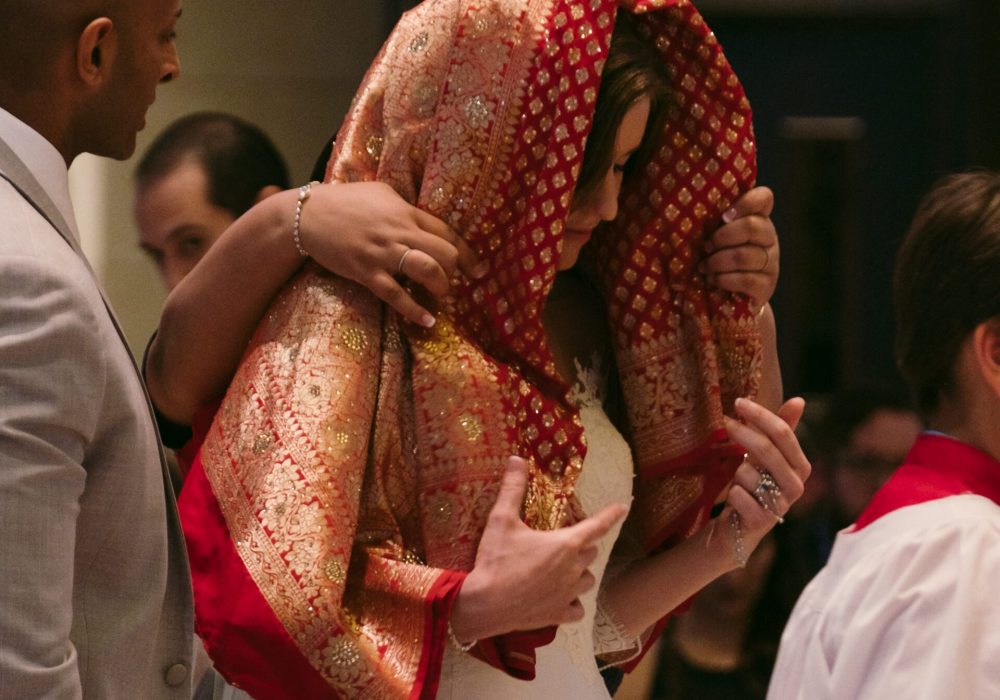
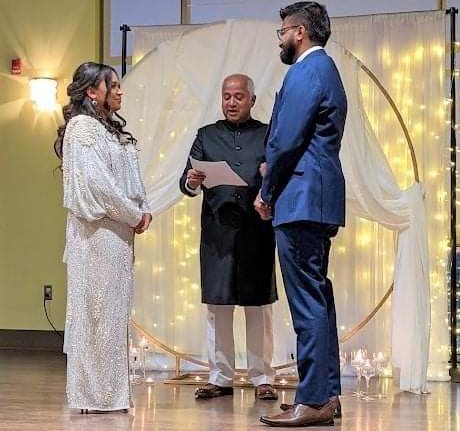
(Representative Photo)

—–

While organizing an interfaith wedding, he keeps in mind all the requirements and cultural and religious aspects of the event so that it becomes a memorable experience for the couple and their families. To make the ceremony complete in all respects, he has a detailed list of proceedings which is as follows:

The initial conversation with the Wedding Officiant Dr. Mike Ghouse

A 25 points Questionnaire follows, to design the wedding proceeding.

A conversation about handling the differences.

Guidance on handling religious festivals at ease.

Dealing with raising children (if at all).

Incorporate Bride/Groom’s social, religious, or cultural traditions.

A draft outline of the ceremony will be prepared by the Officiant.

The couple will review and modify the outline at least three times.

The officiant will perform the wedding per the agreed outline.

The wedding will start on time and close on time.

The Ceremony will be based on the process worked out between the couple and the officiant, and it varies from couple to couple. Interfaith greetings to include people of different faith traditions. Appreciating the bold steps, the bride and groom have taken. Observing customary traditions of either or both Bride and Groom.

Acceptance of each other as his/her spouse.

Exchange of Rings

Pronouncement as husband and wife

Signing the marriage registration papers

A short-customized Sermon to fit the tradition(s) chosen by the couple

Prayer (again from one or two traditions).

Other rituals that parents desire, or the couples want can be included.

Today hundreds of interfaith couples are living happily and in harmony thanks to the services provided by Mr. Mike Ghouse. They acknowledge and appreciate the efficiency and sensitivity with which Mr. Ghouse has officiated and organized their wedding. This gives him a great sense of achievement.

Therefore, he says: “As a Pluralist, I have chosen to officiate the weddings of such couples to reflect the essence of the Bride and Groom’s religious and cultural traditions. I laud such couples who embrace genuine humanity by respecting the otherness of others and accepting each other’s uniqueness. If the couple prefers to give that little extra joy to the religiosity of their parents, relatives, and friends, the sermon would include reflections and the essence of the faiths of the couple.

I am blessed to have performed some uniquely beautiful combinations of weddings from different faith traditions. It was such a joy to see their families and friends cheer at the end and appreciated learning the essence of both the traditions in a few minutes.”

In fact, organizing interfaith marriages has become his mission. His mission is to open people’s hearts, minds, and souls toward each other. The idea of Pluralism drives him. He says,

“If we can learn to respect the otherness of the others and accept the God-given uniqueness of each of us, then conflicts fade, and solutions emerge.”

Indeed, this is his definition of Pluralism and he finds the fulfillment of God’s message of peace and harmony in interfaith marriages.

URL:    https://www.newageislam.com/interfaith-dialogue/interfaith-harmony-marriages-mike-ghouse-pluralist-/d/126609