Mike GhouseComments Off on Muslim Conversions; external or internal?
Isn’t Islam about shaping one’s character to guide humanity to be responsible citizens?
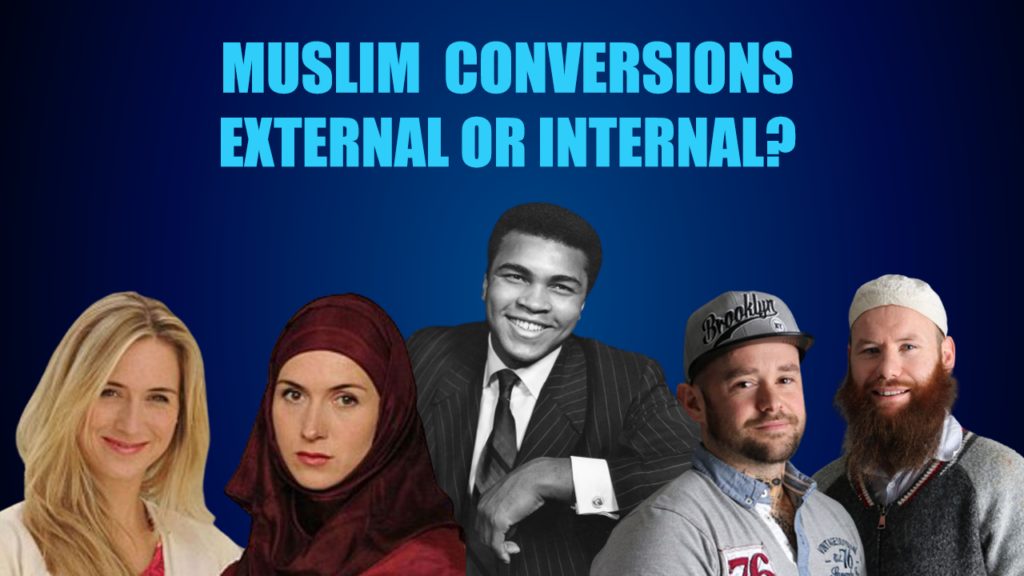
Muhammad Ali and several great men have converted to Islam in character; they did not see the need for the beard, burqa, and garb to be considered Muslims.
When I see Muslims wearing the external symbols to be recognized as Muslims, I wonder the need for such a change.
I respect their wish to emulate the Prophets’ appearance, but the prophet may appreciate it if we emulate his character first, the foundational Sunnah – the Amin.
Which would require us to be caring, kind, just, truthful, and trustworthy to all humanity without exception? When Jesus embraced the socially rejected at his time, he showed us how to embrace all humanity without prejudice. Being Amin may be an answer to our problems to regain respect, trust, and dignity.
Our Christian friends also believe following Jesus means belief in him to be the savior, while Jesus may have meant for them to follow his character to become a blessed peacemaker to fellow humans.
I believe Islam is not about externalities or physical expression, it is about inner transformation. Islam does not permit God to be limited to images, nor has Muhammad wanted his paintings to be carved or made.
One of the most powerful values of Islam is “free will” it is emphasized from the story of Adam to enshrined in the Quran, and the Prophet practiced it. There is no such thing as forced conversion in Islam, however, the power-hungry men in history have compelled people to convert, subjugate, or oppress against their will. It is certainly not Islamic but the men who did really did not follow their religion but wore the fake cloak of a Muslim. As thoughtful people, we need to separate the rascals from Muslims. Free will is a chapter in the Book American Muslim Agenda available at Amazon.
the book: American Muslim Agenda
God created everything in balance/ harmony and spread the entire universe for humans (56:8-11). All he wants for us to do is continually restore peace so all of his creation can live securely and in harmony.
If it is not common sense, then it is not Islam.
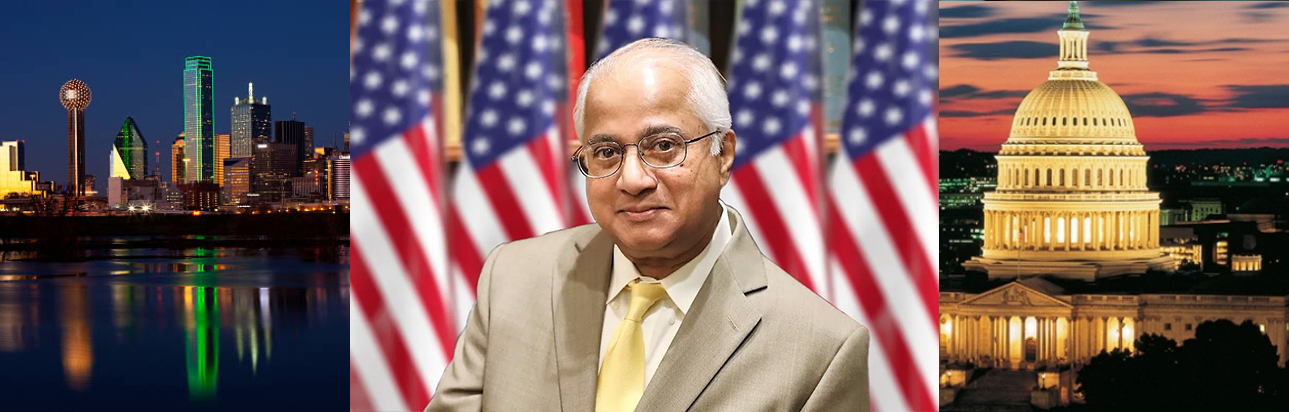
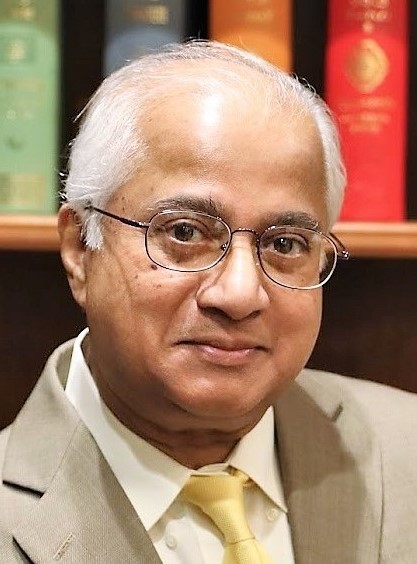
Mike Ghouse is the author of the book American Muslim Agenda, more about him at www.TheGhouseDiary.com.
Mike GhouseComments Off on Muslim Prayer- One Rakat Namaz
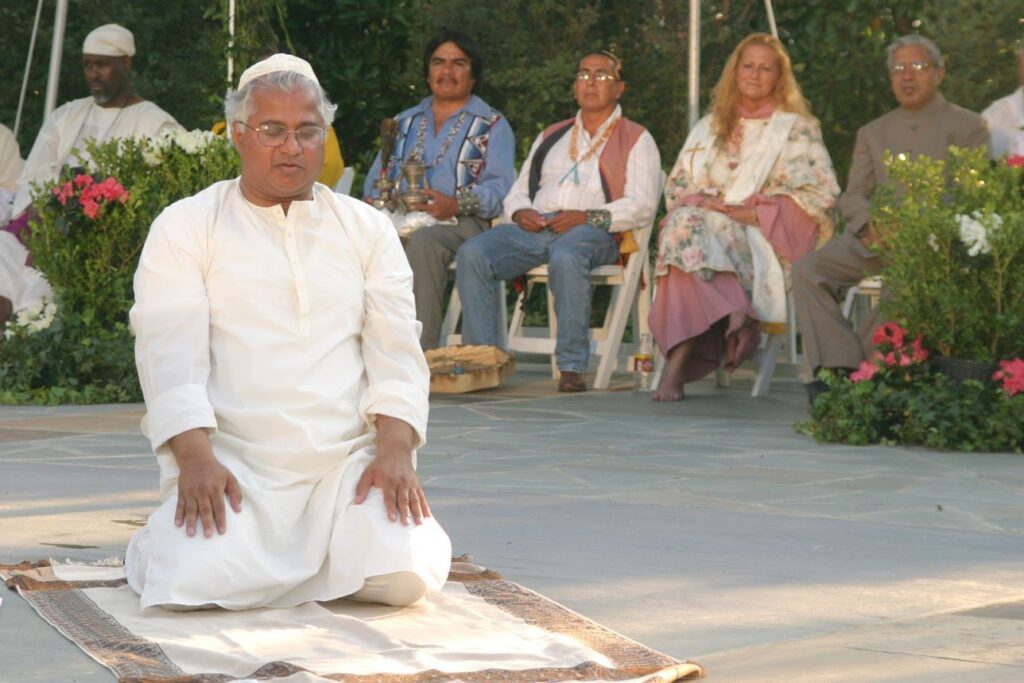
In 2005 we had a major interfaith round table conference; it was a five-day conference with 50 participants representing different religious traditions. The event was organized by Maryann Thompson-Frenk of Memnosyne Foundation in Dallas, Texas
The capstone program was done at the Botanical Gardens in Dallas, and the challenge was each one was to say a “2/3” minute prayer. The native Americans got the exception to take Five minutes. I was representing Islam and scrambled. The group wanted to see how prayers were performed in each faith, and just reciting Fatiha did not do justice.
I decided to go with ONE Rakat Namaz. You guessed it right; I faced extreme opposition. My late wife said she would not join me, but finally, she did.
OLYMPUS DIGITAL CAMERA
So I did the ONE Rakat – it was in Arabic and English. My niyya, the intent was to show how Muslims pray to Non-Muslims, and I asked God to forgive me if I am wrong for taking this step.
I must say that this was one of the most profound prayers I have prayed. I was deeply connected to the creator in those 2/3 minutes. I wish I could pray like that again. I cherish that connection.
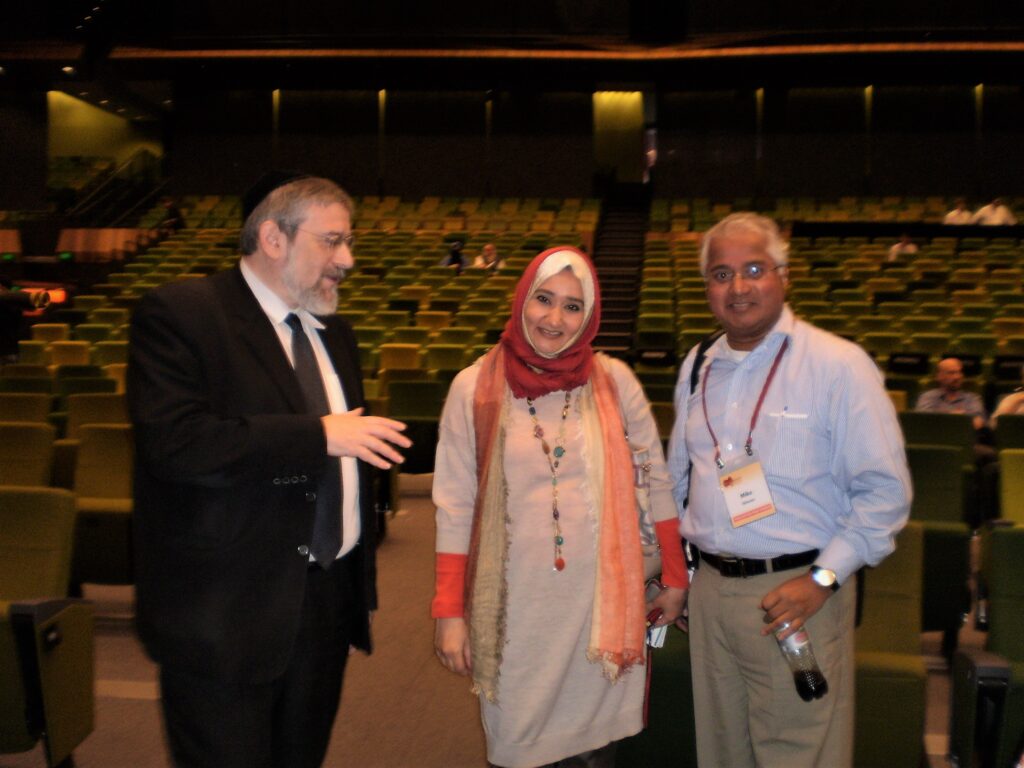
Then in 2009, I was in the parliament of world religions in Melbourne, Australia. I gave several presentations on understanding the essence of the Quran. Then I was in a Jewish conclave. The Chief Rabbi Rosenberg of Israel invited me to be the only non-jew among Jews, and then I was the only non-Sikh among the Sikhs conclave. I thank God every day; I have no barrier between other humans and me.
Here comes this Muslim woman Scholar from Riyadh; she explained how Muslims perform their prayers and asked for a volunteer to do ONE Rakaat demonstration prayer. Guess who volunteered?
Islam is all about common sense and creating “peaceful” societies. To regularly restore harmony to an individual and cohesiveness with what surrounds one. If it is not common sense, then it is not Islam.
The first picture is me praying One Rakat; 2nd picture is with the Saudi Muslim woman scholar, she runs a prominent Islamic Institution in Riyadh. I don’t remember her name.
When we live as neighbors, we might as well learn about each other. The best way to build cohesive societies is for its members to understand each other’s sorrows and joys, and festivities and commemorations. Wouldn’t it be nice if you know a little bit about your neighbor’s festival and perhaps invite them to your celebrations to start safe neighborhoods by understanding each other? Every human and every religious group celebrate something or the other in their way, each one is different, but the essence is the same; celebrations and commemorations. A simple language is used for most people to get a gist of it. Over the last 25 years, I am blessed to have written the essence of major festivals of almost all religions from Bahai to Zoroastrians and everyone in between. It’s all on the google search.
…………………………….. ………………………………..
HAPPY EASTER | A MUSLIM CELEBRATES EASTER
While 2,000 plus Easters have come and gone, has he really risen yet? Risen within us that is? I hope and pray that each of us will let Christ rise and shine through us, so we can allow him to use us to bring about a change that we are all yearning; a world where all of God’s children are respected and honored. Happy Easter!
Whether Jesus was buried and resurrected, or taken up by God, faith in him is shared by more than half of the world inclusive of Muslims and Christians. Whether you believe in Jesus or not, his message of loving thy enemy, love thy neighbor and forgive the other will set us free. Can we celebrate that message? I want to make a point here: Jesus and his message belong to the whole humanity, just as the message of all the spiritual masters including Buddha, Muhammad, Krishna, Zoroaster, Nanak, and others, who are a blessing to humanity.
Perhaps I may be the first Muslim to be baptized. It was an enriching experience to me in particular, feeling the symbolic transformation of the feeling of love towards all of God’s creation. Muslims feel the same upon the performance of the Hajj Pilgrimage; we become child-like with love for all of God’s creation; life and matter. The Hindus cherish an identical feeling when they take a dip at the Sangam in River Ganges, particularly during the Kumbh Mela.
Passover is the celebration of freedom. I hope this Passover brings freedom to humanity from the Corona. I will be participating in the Passover over Zoom with Andrea Barron I have bought traditional ingredients and am ready to participate. I have been a part of Passover on and off since 2005, started at Temple Shalom in Dallas, Texas.
Passover is a Jewish holiday that commemorates the story of the Exodus when Jews were freed from slavery in Egypt. It is celebrated for seven or eight days and one of the most widely observed Jewish holidays. The highlight is the Seder meal, held in each family’s home at the beginning of the festival, when the story of their deliverance is recounted, as narrated in the Haggadah (the Telling, or the Story). Matzah, (unleavened bread) is eaten throughout the festival, as are other foods that contain no leaven (yeast). There is a significant spring cleaning in the home shortly before the festival to ensure that no trace of leaven is left in the house during Pesach. Coconut pyramids and matza balls (which are put in soups) are foods that might be eaten at this time.
One of my Christian friends interrupted me by saying that these charities served only Muslims. I asked him if Catholic Charities was only for Catholics? He said no, then I said, so are Muslim Charities, they are out there whenever there is a disaster serving fellow humans regardless of their religion. Azim Premji is one of the biggest donors in India, maybe the biggest in India, and it goes to all Indians. Salman Khan donates 90% of his income to his Being Human foundation, which serves all Indians. During the Gujarat earthquake, I know several of my Muslim relatives gave their jewelry for the cause. Nizam of Hyderabad donated a planeload of Gold when PM Shastri called for help. He also donated large sums of money to the Banaras Hindu University. In the first week of April 2010 – two Hindus in different parts of India were given the last rites by Muslims, as the relatives did not want to go near the dead bodies of their loved ones. Frank Islam Foundation pays to promote good stories to build harmony among the people of India. The list is endless.
A majority of us will survive Corona, some of us will not. How do we live on or how do we leave if we don’t? It’s a 9 minutes video, and I hope it is meaningful to you. https://www.youtube.com/watch?v=9Tsu2hqH6q0
We have a choice to reluctantly accept what comes our way, or choose to shape the future we want. Indeed, we plan our lives about our incomes, family, residence, and retirement and future of our kids and grandchildren. We also prepare our businesses to deal with the economic vagaries to sustain and grow.
One of the significant sources of conflict comes from our interactions with fellow countrymen, in our case, Americans. It is how we deal with each other and treat the otherness of the other with the ultimate objective of living a secure life with the least tensions.
Corona got dumped on us, and our culture of shaking hands, sitting next to each other in the meetings, and how we talk and eat has all changed. We have become more hygiene conscious, and that is good, reluctantly we are welcoming it.
Our Scientists and Doctors will find a cure to Corona, as they have discovered remedies for Plague, TB, Malaria, Polio, Sars, Ebola, Swine flu, Chicken flu, and other viruses.
When we face difficulties, we take our frustrations on each other and aggravate the situation further instead of finding solutions. We can do better than that, and we are Americans, free and brave people.
We have led the world in every aspect of human progress from economics to medicine, automation to information technology, and set the world on the course of the government of people by the people. Now we have to apply our ingenuity in building cohesive societies.
At the Center for Pluralism, we are dedicated to building a cohesive America, an America where each one of us feels secure about our ethnicity, faith, culture, race, and other uniqueness. To accomplish that vision, we have several programs, events, and workshops to bring about the results.
Where ever we go, we witness people of different faiths, races, and ethnicities interacting, working, studying, intermingling, playing, and even marrying each other. Indeed, we see America’s diversity in every public space. American democracy works for the benefit of every American. These new interactions are bound to create conflicts and pit one group of Americans against the other.
We have to prepare ourselves to prevent such conflicts so that each American can live securely with his or her faith, culture, gender, race, sexual orientation, or ethnicity. New societal norms are emerging, and we have to deal with them.
We have witnessed the attitudes of the Americans who have been here for more than two generations towards new Americans. It is not a phobia, but a natural feeling of fear of losing one’s way of life and resources. The racial conflicts and the supremacist feeling among a few are the products of non-acceptance of the other. Then some of among us are inflicted with the diseases of Anti-Semitism, Homophobia, Misogyny, Islamophobia, Hinduphobia, Xenophobia, and other phobias. How long will we let these diseases consume us in hate and tensions, we need to extricate ourselves and be the free people again?
A vast majority of us have heard things about others from our friends, news, social media, or our knowledge of others, and we instantly form opinions about others. As responsible individuals, we must strive to strip stereotyping and build pathways to ensure the smooth functioning of our society, whether it is the workplace or our neighborhoods.
We have no shame in poisoning our kids and screwing their lives. Through our actions, our kids imbibe our prejudices towards others in general, particularly against women, Jews, Muslims, Hindus, Blacks, Conservatives, or Liberals. It must be painful for our children if they have to work with the very people whom they don’t trust. First, the organization loses productivity when employees don’t work cohesively with others. Secondly, they live in tensions at work and at home. They cannot give their 100% to work or their families and live a fuller life.
We have to break away from our biases toward fellow humans to live a more vibrant and happier life.
We need to reassure each other, particularly the disconnected ones, that together as Americans, we are committed to safeguarding the American way of life. No American needs to worry about losing his or her way of life. Together as Americans, we uphold, protect, defend, and celebrate the values enshrined in our Constitution, a guarantor of the way of life for each one of us.
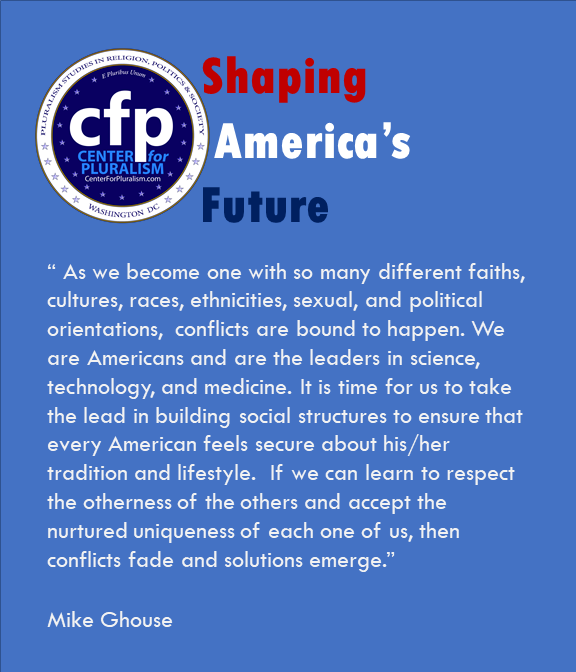
If we can learn to respect the otherness of others and accept the God-given uniqueness of each one of us, then conflicts fade and solutions emerge. We have the programs to facilitate people to open up to each other. Knowledge leads to understanding, and understanding to acceptance of each other.
The Center for Pluralism will continue to bring non-stop actions in bringing Americans together from different faiths, political affiliations, societies, and cultures and be a catalyst for a safe and secure America for each one of us, as we move through this transition.
Nothing will change unless someone takes the initiative and makes a commitment to bring about the change. To quote Margaret Mead, “Never doubt that a small group of thoughtful, committed citizens can change the world; indeed, it’s the only thing that ever has.” Mahatma Gandhi beefed it up by saying, “Be the change that you wish to see in the world.”
At the Center for Pluralism, we are committed to building a cohesive America, an America where each one of us feels secure about our ethnicity, faith, culture, race, political and sexual orientation, and other uniqueness.
If your vision for America reflects these ideals, we invite you to study our home page and let us know if you are interested in joining us.
DONATE Please donate to America Together Foundation/ Center for Pluralism to achieve to work on building our future society. We are a non-profit 501 (c) (3) organization, your donations are tax-deductible.
Mike Ghouse is the founder and president of the Center for Pluralism. He is a speaker, thinker, author, pluralist, activist, newsmaker, and an interfaith wedding officiant. He is committed to building cohesive societies and offers pluralistic solutions to the media and the policymakers. www.TheGhousediary.com
We have a choice to reluctantly accept what comes our way, or choose to shape the future we want. Indeed, we plan our lives about our incomes, family, residence, and retirement and future of our kids and grandchildren. We also prepare our businesses to deal with the economic vagaries to sustain and grow.
One of the significant sources of conflict comes from our interactions with fellow countrymen, in our case, Americans. It is how we deal with each other and treat the otherness of the other that determines the future where we all can live a secure life with the least tensions.
Corona got dumped on us, and our culture of shaking hands, sitting next to each other in the meetings, and how we talk and eat has all changed. We have become more hygiene conscious, and that is good, reluctantly we are welcoming it.
Our Scientists and Doctors will find a cure to Corona, as they have discovered remedies for Plague, TB, Malaria, Polio, Sars, Ebola, Swine flu, Chicken flu, and other viruses.
When we face difficulties, we resort to blaming someone or the other, and take our frustrations on each other and aggravate the situation further instead of finding solutions. We can do better than that, we are Americans, free and brave people.
We have led the world in every aspect of human progress from economics to medicine, automation to information technology, and set the world on the course of self-rule, which is the government of people by the people for the people. Now we have to apply our ingenuity in building cohesive societies.
At the Center for Pluralism, we are dedicated to building a cohesive America, an America where each one of us feels secure about our ethnicity, faith, culture, race, and other uniqueness. To accomplish that vision, we have several programs, events, and workshops to bring about the results.
Where ever we go, we witness people of different faiths, races, and ethnicities interacting, working, studying, intermingling, playing, and even marrying each other. Indeed, we see America’s diversity in every public space. American democracy works for the benefit of every American. These new interactions are bound to create conflicts and pit one group of Americans against the other.
We have to prepare ourselves to prevent such conflicts so that each American can live securely with his or her faith, culture, gender, race, sexual orientation, or ethnicity. New societal norms are emerging, and we have to deal with them.
We have witnessed the attitudes of the Americans who have been here for more than two generations towards new Americans. It is not a phobia, but a natural feeling of fear of losing one’s way of life and resources. The racial conflicts and the supremacist feeling among a few are the products of non-acceptance of the other. Then some of among us are inflicted with the diseases of Anti-Semitism, Homophobia, Misogyny, Islamophobia, idolatry phobia, Hinduphobia, Xenophobia, and other phobias. How long will we let these diseases consume us and continue to give us tensions? We need to extricate ourselves and be the free people again.
A vast majority of us have heard things about others from our friends, news, social media, or our knowledge of others, and we instantly form opinions about others. As responsible individuals, we must strive to strip stereotyping and build pathways to ensure the smooth functioning of our society, whether it is the workplace or our neighborhoods.
We have no shame in poisoning our kids and screwing their lives. Through our actions, our kids imbibe our prejudices towards others in general, particularly against women, Jews, Muslims, Hindus, Blacks, Conservatives, Atheists or Liberals. It must be painful for our children when they grow up and have to work with the very people whom they have difficulty trusting. First, the organization loses productivity when employees don’t work cohesively with others. Secondly, they live in tensions at work and at home. They cannot give their 100% to work or their families and live a fuller life.
We have to break away from our biases toward fellow humans to live a more vibrant and happier life.
We need to reassure each other, particularly the disconnected ones, that together as Americans, we are committed to safeguarding the American way of life. No American needs to worry about losing his or her way of life. Together as Americans, we uphold, protect, defend, and celebrate the values enshrined in our Constitution, a guarantor of the way of life for each one of us.
If we can learn to respect the otherness of others and accept the God-given uniqueness of each one of us, then conflicts fade and solutions emerge. We have the programs to facilitate people to open up to each other. Knowledge leads to understanding, and understanding to acceptance of each other.
The Center for Pluralism will continue to bring non-stop actions in bringing Americans together from different faiths, political affiliations, societies, and cultures and be a catalyst for a safe and secure America for each one of us, as we move through this transition.
Nothing will change unless someone takes the initiative and makes a commitment to bring about the change. To quote Margaret Mead, “Never doubt that a small group of thoughtful, committed citizens can change the world; indeed, it’s the only thing that ever has.” Mahatma Gandhi gave life to it up by saying, “Be the change that you wish to see in the world.”
At the Center for Pluralism, we are committed to building a cohesive America, an America where each one of us feels secure about our ethnicity, faith, culture, race, political and sexual orientation, and other uniqueness.
If your vision for America reflects these ideals, we invite you to study our home page and let us know if you are interested in joining us.
DONATE Please donate to America Together Foundation/ Center for Pluralism to achieve to work on building our future society. We are a non-profit 501 (c) (3) organization, your donations are tax-deductible.
Mike Ghouse is the founder and president of the Center for Pluralism. He is a speaker, thinker, author, pluralist, activist, newsmaker, and an interfaith wedding officiant. He is committed to building cohesive societies and offers pluralistic solutions to the media and the policymakers. www.TheGhousediary.com
A majority of people in each religious group tend to be moderates and follow the safety guidelines during the Corona crisis. However, there is a tiny percent among all religious groups, who defy the lockdowns during Corona.
The irony is the same religion is used for both groups to justify their stand. During the border crisis, the entire Christian community was against the treatment of caging and evicting the parents and children while the extremes among Evangelicals (yes only the extremes, as I have many Evangelical Pastor friends who are with the majority of Americans) was on the wrong side.
The case is the same with Muslims, Jews, Hindus, and others with no exception. While the Sikhs, Bahais, Zoroastrians have no such split at this time as they are smaller groups. If they get big, they will split like an amoeba, a natural order.
This is an open link, and we will add more stories about how religions are acting towards Corona.
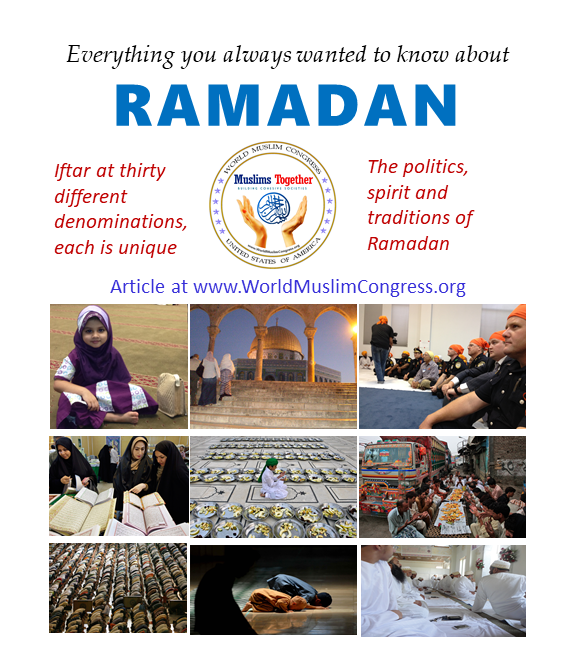
The Spirit, Politics, and Rituals of Ramadan are the three main topics of this article. Ramadan is pronounced Ramzan in the Subcontinent, Iran, Turkey, and the Central Asian Republics wherever the Persian linguistic influence exists, elsewhere in the world, it is Ramadan. In the Arabic language, “Z” is “D” and hence Ramadan.
Some may disagree but starting from our birth until the last rites of our lives and beyond, every moment is filled with rituals. Whether we go to the gym, eat, sleep, wear clothes, drive, or talk on the phone, we are indeed following rituals.
Rituals signify the milestones of our daily life. Every significant moment of the day is a ritual. It is an unwritten way of measuring our progression, a memory pattern to bring discipline to our actions. A disciplined life requires one to do things on time, manage personal relationships, drive to a destination, or keep within one’s means. The result of disciplined behavior is worthwhile for most people. When joyous, a sense of incompleteness lingers in our hearts until we get the opportunity to express that joy.
The spiritual masters have captured the human inclinations towards rituals and have molded it with the art of self-discipline in their respective religions. The purpose of each tradition was to bring a balance in our lives. Twenty-five hundred years ago, Buddha, the enlightened-one, explained that human suffering comes from unrestrained desires to possess and had recommended a middle path. The same recommendation came from Prophet Muhammad fourteen hundred years ago. Indeed, that is the wisdom of all religious and social traditions. Therefore, fasting is an integral part of almost all major religions in which one must rise above his or her basic desires.
Every faith is composed of a set of unique rituals to bring discipline and peace to human life. Fasting is one of the five essential rituals that Muslims around the world observe. Ramadan is a month given as a gift by Islam to its followers to teach discipline and to bring moderation in their daily lives. It is the ninth month of the Islamic lunar calendar, which Muslims observe with ritual precision. It requires one to abstain from food, drink, intimacy, ill-will, ill-talk, harmful actions and other temptations from dawn to dusk, every day for a full month.
It’s a celebration time when Muslims around the world anxiously wait for the first moon of the ninth Lunar month to appear in the sky. The families gather in their backyards, or get on the nearest hillock or climb on top of their homes, and wait for the pencil-thin moon to appear on the horizon, and when it does, Ramadan begins. It is a joyous activity.
Right after the moon is sighted, an announcement that Ramadan has started is made and thanks to the social media, it reaches the entire Muslim populations within a few minutes, including Muslims in Amazon to Zulu land. Yes, there are Muslims there.
As the Christians do the count down from the first day of Christmas or Hindus express devotion for each one of the nine days through Navaratri or the Jews follow eight days of Chanukah, Jains observe nine days of Paryushan. Others follow a similar path and the Muslims count the next 29 to 30 days with a sense of devotion.
Muslims are required to pray five times a day and most fulfill this obligation, particularly during the month of Ramadan. Prayers can be congregational or individual and are performed in the morning, noon, afternoon, evening, and night. During Ramadan, starting the night the moon is sighted until the night before the last day of fasting, additional congregational prayers called “Taraweehs” are offered following the regular nightly prayer. Every night, during the Taraweeh prayers, and Imam recites a section of the Quran which has 114 chapters divided into 30 sections.
Due to Corona, this year, every mosque around the world has canceled the congregational prayers, and Muslims will pray in their homes. However, the ultra-right Muslims like the ultra-right-Christians, Jews, Hindus, and others defy the orders and congregate anyways.
The Spirit of Ramadan
Although Ramadan is famous in the west for its culinary delicacies and fancy iftars (ceremonial breaking of fast at sundown), the spirit and intent of Ramadan lie in a human transformation achieved in a month-long journey of finding oneself in tune with spirituality.
What is spirituality? It is not wearing fancy clothes to separate yourselves from the others, as the clergy and kings in most traditions, do. Spirituality is to train our inner selves to decrease arrogance and a sense of superiority and increase humility, empathy, and compassion.
Knowing about hunger is not the same as knowing to fast. Empathy is not a rational equation; it is a human experience. Our hardness of heart often springs from our distance from the human condition of others. The poor, sick, disenfranchised, oppressed — we rarely walk a mile in their shoes, not even a few steps. “Rest assured,” cautioned one teacher, “if you do not taste what it feels like to be hungry, you will not care for those who are.”
God wants humans to learn to have empathy for those who don’t have, and learn to respect the otherness of others. The Prophet Muhammad (PBUH) added to that fasting of the stomach must be matched by the fasting of the limbs, eyes, ears, tongue, hands, and feet all have their fasts to undergo. The tongue’s temptations, for example — lies, backbiting, slander, vulgarity, and senseless argumentation — must be challenged and curbed to maintain the integrity of the fast.
The Consciousness of behavior and vigilance over action are the most profound dimensions of Fasting: The Fasting of the heart focuses on the attachment to the divine. That is when Ramadan becomes a source of peace and solace, just as Christmas goes beyond the rituals to bring forth kindness, charity, and caring.
True Fasting is self-purification; from this comes an abundant inner life that brings about values such as justice, generosity, patience, kindness, forgiveness, mercy, and empathy — values that are indispensable for the spiritual and social success of the community.
Fasting imparts a sense of what it means to be truly human, and its observance reflects its universality in Bahai, Buddhist, Christian, Hindu, Jain, Jewish, Zoroastrian, and other faiths.
Ramadan will come and go with such stealth that we cannot but think of our mortality. What is it that we value, and why? Habits, customs, even obsessive behavior like smoking can be given up with relative ease in the face of a higher calling.
For fasting to be truly universal, its benefits must extend beyond the fraternal ties of Muslims and must continue to forge a common humanity with others.
The Politics of Ramadan
Politics plays a crucial role in our Temples, Synagogues, and Churches; Mosques are no different. Moon sighting is full of politics resulting in different start dates for Fasting and Eid (celebration at the end of month-long Fasting). Currently, various methods are practiced to determine the start date.
A growing number of American Muslims have adopted NASA’s calculations to set the start date of Fasting and Eid. Many Muslims believe in seeing the first moon with bare eyes to start fasting, and some follow others. Every group enjoys their tradition, and yet they are frustrated and wish that we all observe it on the same day. This year, most Muslims around the world will begin fasting from either on Thursday, April 23rd or Friday, April 24th, 2020 (Moon sighting to begin on the evening of April 22nd). In the pluralistic tradition of Islam, a majority of Muslims have accepted each method as valid.
The Traditions of Ramadan
Throughout the month of Ramadan, every day, with small variations in practices, families rise early around 4:00 AM and gather up in the kitchen to participate in preparing the meal. As a kid, I used to chop onions, one rolled the rotis (flatbread), the other blew air through a steel pipe into the old-fashioned earthen stove, one made the tea, and of course, mother managed it all. It was a family affair.
Traditionally, the entire family sits on the floor in a circle, says a short blessing, and eats the meal while having a conversation. Everyone has plenty of time to finish off the food and water intake at the call of Adan, roughly an hour before sunrise.
Then most people go to the mosque to pray, but this year, due to the lockdown to control the spread of COVID-19, all mosques are closed and Muslims will perform all the prayers at home.
Throughout the day, a conscious effort is made to abstain from food, water, or temptations that are detrimental to self-discipline. Those who do not observe Fasting, honor the ones who do, by not eating or drinking in their presence.
One should remain steadfast despite temptations; many a fast observing Muslims are open to their friends eating. Indeed, it adds to one’s will power to resist the temptation to eat, thus enriching ones’ faith and discipline.
One of the most appealing aspects of Ramadan is the domino effect other Muslims have on you to guard yourselves against greed, anger, ill-will, malice, hate, jealousy, and other ills of the society. One feels pious during the month. Of course, there would always be a small percentage in a group that does not receive that wisdom.
When the time to break the fast approaches towards the sundown, anxiety builds up, it is almost like the countdown of seconds when the space shuttle takes off—curiously watching when that big red ball of the sun sinks on the horizon. If it is cloudy, they follow the prescribed time. A prayer call (Azan) signifies the time to break the fast. It is called Iftar.
Prophet Muhammad had initiated a healthy way of breaking the fast; it was graduating the empty stomach with light items like dates, fruits, and veggies to prepare the stomach to receive a full meal after the prayer break. The dates are the most popular item around the world, they are chewy, meaty, and tasty after a long day of Fasting, and dates are also a preferred item as it was for the Prophet. It has the right nutrients to give one a smooth transition from fasting all day to eating a full meal. Indeed, each Muslim at least consumes three dates, which is 5.4 billion dates each evening for a total of at least 162 billion dates in one month.
The breaking of fast, also known as “Iftar,” has become a community event. It is an excellent opportunity for friends of Muslims belonging to other faiths to host the Iftars. It is a way to bond, connect, and build cohesive societies. Unfortunately, this year, no one is holding the iftar parties.
President Clinton started the tradition of holding an Iftar party at White House, which was carried forward by President Bush and then-President Obama. They invited a few Muslim leaders from around the United States. President Trump also held the iftars for the Muslim Ambassadors. It is a major social event for the politicians, just as it is with Christmas, Rosh Hashanah, Diwali, and other festivities.
After Iftar most people go to the mosque to pray Taraweeh. However, as previously mentioned, the mosques are closed this year, due to the lockdown to control the spread of COVID-19. Therefore, Muslims will need to perform all the prayers at home.
Now comes the 29th or 30th evening – everyone is anxiously watching for that new moon to appear again, this time to declare Eid.
Once the new moon is sighted (or go by the calendar), Ramadan ends and the Eid celebrations begin. In the Subcontinent, it is known as the Chand Raat or the moonlit festivities. Everyone rushes to the market to purchase gifts (same scenario as last-minute Christmas shopping) and food items (I am talking about 40 years ago when everything was bought fresh on the given day).
Families gather up in one large facility to accommodate the whole town, or the convention center, or a Mosque. In my case, back home in the town of Yelahanka, we all went to the open-air mosque by the cemetery and prayed together.
On this day, one formally forgives and gets forgiven and starts the year with a clean slate. The Quran says the dearest person to God is the one who forgives. Everyone hugs each other three times; I am your friend; you are my friend, and as friends, together we forgive each other. It is the equivalent of Michami Dukkadam in Jainism.
The phrases Ramadan Kareem and Ramadan Mubarak are usually used to greet each other from day one to the last day of Ramadan and Eid Mubarak, or Happy Eid is used on the Day of Eid. Indonesia holds the largest Muslim population in the world and they say, “Selamat Hari Raya” – However, Eid Mubarak and Ramadan Kareem are the most popular around the world.
Traditionally everyone in the family wears new clothing, a symbol of starting afresh. The head of the family gives gifts, traditionally in the form of cash (called Eidi) to all members of the family to spend as they wish and to teach responsibility with freedom. If you have a guest celebrating Eid with you, then his Fitra is obligatory upon you too. Every able Muslim also pays a special charity called “Fitra” for himself and for all his dependents. The Fitra for each person must be equal to the cost of a good meal and must be immediately distributed to the poor and needy.
A few years ago, I was in Louisville, Kentucky for Eid, and had written a similar piece and had suggested Muslims make the point to thank the police officers for ensuring the safety of the congregations. One the way in, I talked to a police officer and showed him the email appreciating them. He asked me to forward it to him. When we finished the prayers, the police officer had forwarded that email to his entire group. I urge my fellow Muslims to do that. We need to appreciate them, the firemen, and the military personnel in the uniform.
Don’t forget the poor and have-nots; Islam is about building cohesive societies to care for everyone. Indeed, two of the five obligatory rituals of Muslims take place in the month of Ramadan. One is Fasting, and the other is Zakat, which is like the tithe in Christianity, Daan in Hinduism, Sedekah in Judaism, and Dusvand in Sikhism, and there are other words in other traditions. Every family (except the poor) calculates 2.5% of the value of their assets and passes that amount on to the needy. It is an investment in human capital, to help uplift everyone on a level playing field to maintain a sustainable good in society. It is preferable to give Zakat during the month so that needy people can have it on time to be able to celebrate Eid.
On the culinary side, it is a feast! A variety of dishes are prepared, over the years I have discovered that the most common item around the globe is a dessert made out of vermicelli’s, i.e., hair-thin noodles cooked in milk with nuts, dates, honey, and other goodies, it is both in liquid or solid forms. It is a feast! Then each country around the world also has its own unique traditions.
A Challenge to Muslims
I am sharing this story with a particular reason. Sean Hannity on Fox News and I have argued extensively. He was afraid and gave his audience the impression that Muslims are striving to bring the Caliphate back; it was red meat for them. I argued, “Sean, it will never happen,” I am glad his marginal audience got my message.
Caliphate will never come back, there is no trend, nor there is a desire among Muslims. His peers genuinely elect the Pope; Muslims indeed chose the first four caliphs in the same manner. They were pious and faithful servants of people. They were exemplary humans.
Mu’awiyah ibn Abu-Sufiyan became the 5th Caliph – he killed the emerging democratic society among Muslims. Even though he called himself a Caliph, he became a dictator-King. His son Yazid carried the dictatorial tradition.
No Muslim wants that kind of Caliphs ever again, there were several competent caliphs in between through the fall of the Ottoman Empire in 1922, but most of them acted like dictator kings. The United States laid the foundation for actual democracy and that resonated with Muslims and given a choice, all Muslims want freedoms, and indeed, currently, more than 60% of Muslims live in Democracies.
Another critical reason Caliphate will not materialize is the deep division among Muslims, and each group is hell-bent on declaring the other as non-Muslim or less than a Muslim. As long as that arrogance exists, any Caliphate is out of the question.
So here is a challenge to my Muslim brothers and sisters all over the world – by the way, whatever I ask others to do, I do it first. I urge my fellow Muslims to visit each other’s Mosque, to learn to respect and accept different traditions. Islam is about diversity, God says, he has created us as tribes, nations, and communities to which Prophet added, that someday his followers will multiply into an infinite (72) number of groups. Each one of us should compete in doing good deeds. A good deed is any act done with the intention of serving fellow humans without expectation of any returns. It is like planting a tree knowing well that you will not be the beneficiary of its shade or the fruit.
Over the years, during Ramadan, I have visited Mosques of every Muslim tradition and about 30 of them; Sunni, Shia, Sufi, Ahmadiyya, and all their sub-groups. Indeed, I have documented the uniqueness of each culture. Particularly in the years 2011 and 2012.
Conclusion
For fasting to be truly universal, its benefits must extend beyond the fraternal ties of Muslims and must continue to forge common humanity with others. Fasting is meant to impart a sense of what it means to be truly human, and its observance reflects its universality in Bahai, Buddhist, Christian, Hindu, Jain, Jewish, Zoroastrian, and other faiths.
Although the annual ritual of Fasting takes thirty days, the journey to perfect spirituality is endless. May our hearts continue to desire the deeper spirituality. May we aspire to find our balance, connect, open our hearts and minds to fellow beings; the joy that comes with it will be ours to keep, Insha’Allah forever!
Ramadan Kareem to all and be safe.
Mike Ghouse is the founder and president of the Center for Pluralism. He is a speaker, thinker, author, consultant, pluralist, activist, news maker, and an interfaith wedding officiant. He is committed to building cohesive societies and offers pluralistic solutions on issues of the Day. The Book information at www.AmericanMuslimAgenda.com and his info at www.TheGhousediary.com Share this:
A strong unquestionable faith drives a small segment of people within every religious group. Facts don’t matter to them, and now, they are challenging the ban on gatherings to minimize the spread of Corona.
Is there a religious group out there that is devoid of defiant people?
Image courtesy – India Today
A few examples are listed here below; please note that a majority of all religious people have chosen to stay home and not gather in large numbers or gather to pray in their places of worship.
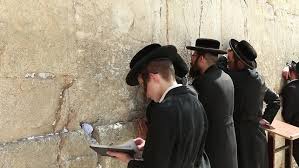
A small group of Orthodox Jews has challenged the government of Israel for their ban on gathering at the western wall.
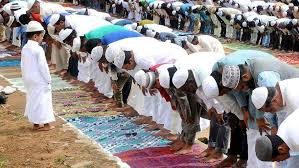
Muslim rightists are ignoring the safety precautions and have chosen to pray in congregations. In contrast, almost all mosques in the world have been shut down, including the holiest of the Mosques in Mecca, Medina, Najaf, Karbala, and other ‘sacred’ places of worship. The Sunni, Shia, Ahmadiyya, and Sufi Muslim leaders have offered the right guidance to their congregations.
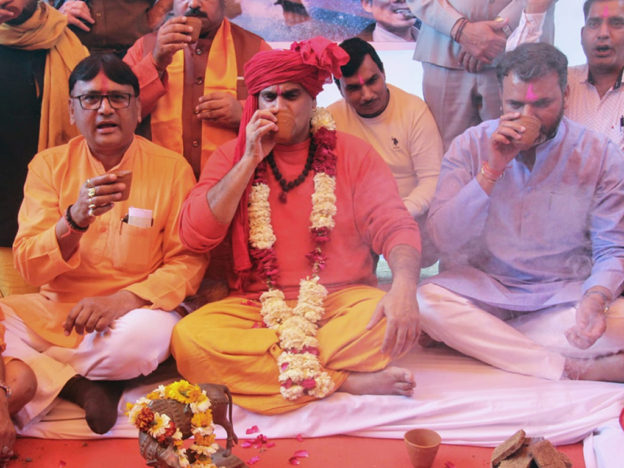
The fundamentalists among Hindus have organized Cow Urine drinking gatherings with the belief that it is a cure for all ailments, including Corona, while a majority has chosen otherwise.
A few Christian conservatives Pastors and Governors in the United States have defied the ban on gatherings and holding prayers in the churches and urging people to go to the beaches.
The Sikh community has taken their belief to their heart, risking their lives and serving humankind by feeding the hungry, disinfecting passing cars, bicycles, and other modes of transportation. The Sikhs have become a model community to emulate.
What is common to all of them is blind faith in God, but that is their belief, just as we all have our own convictions.
Their behavior is purely human; during difficult times, when we don’t understand the complexities of nature, some among us choose to have faith in God, and that is their choice, as it comforts them.
Religion by itself is common sense – created to build cohesive societies where every human feels secure about his/her faith, ethnicity, culture, race, and other uniqueness. The idea of religion was to bring peace and harmony to society in general. A majority of people get that right, and a few don’t. We need to find a way for the few to see their religion. I am sure there is a book on all religions that highlights the common sense approach of the respective faiths. In the case of Islam, there is a book out on Amazon called the American Muslim Agenda.
Humans are the only species who have the capability of surviving the calamities, fires, floods, Tsunamis, Katrina’s, meteorites, drought, famine, and other deadly diseases. The causer (God) of all creation has uploaded intelligence into humans to survive. Indeed, humans are also known as the honored species for their brains.
If we can learn to respect the otherness of the others and accept the God-given uniqueness of each one of us, then conflicts fade and solutions emerge.
No group is free from blind faith. If blind faith brings solace to some, let them have it, don’t denigrate it.
However, stay away from them and don’t catch what they have. Take your precautions, wash your hands, cover your mouth and nose, and be careful what you touch. Most certainly keep a distance from other humans for the time being.
We have seen many epidemics in history, the great plague, Spanish flu, chicken flu, swine flu, HIV, Ebola and a whole lot. And now, Corona and this shall pass too.
Dr. Zia Shah of the Muslim Times writes about the immune system, “Looking for the answer to this question brings us to our immune system, which is a fantastic, wonderfully organized, a military machine that each of us possesses against thousands if not millions of bacteria and viruses. This system has helped us, and our ape ancestors survive for millions of years.”
Indeed, most of us will survive and live on, and some of us will not. How do we cope with it? How do we free ourselves, if we live on, or leave the world? Here is an inspiring video that offers solutions.
Video about life before and after Corona
Dr. Mike Ghouse is a Public Speaker, thinker, author, business consultant, organizer, newsmaker, and an interfaith wedding officiant. He is deeply committed to Religious Freedom, Human Rights, and Pluralism in Religion, Politics, and Societies. His new book American Muslim Agenda is available on Amazon, and two more books on Human Rights and Pluralism will be released this year. He is committed to building cohesive societies and offers pluralistic solutions on issues of the day. www.TheGhousediary.com
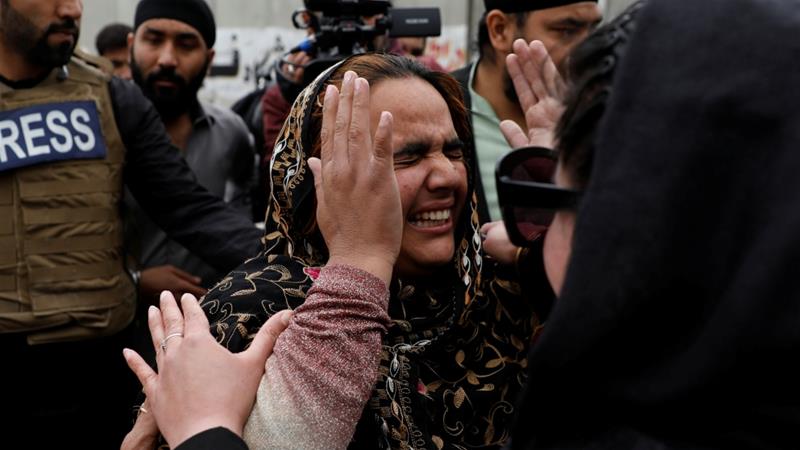
March 25, 2020, Washington, DC — The Center for Pluralism condemns the attack on the place of worship of the Sikh Community in Afghanistan.
In a time when the Sikh Community has become a shining example to the world by serving all people affected by the Corona Virus, it is sad that their place of worship is being attacked.
We had condemned identifying Sikhs in Afghanistan to harass them during the Taliban take over in the early ’90s.
The Sikhs have stood up for the rights of others, as well as helping the downtrodden and oppressed people around the world. During the Shaheen Bagh sit-outs, they provided food and water to the protestors. And now while Corona is raging in India, the Sikhs are out on the road, disinfecting cars, scooters, business and dropping of Rice and Dal bags to the needy.
The Sikh community was recognized for the example they set in dealing with the tragedy in Wisconsin.
Here are a few of the many pictures that the Center for Pluralism was involved with the Sikh community over the years
March 25, 2020, Washington, DC — The Center for Pluralism condemns the attack on the place of worship of the Sikh Community in Afghanistan.
In a time when the Sikh Community has become a shining example to the world by serving all people affected by the Corona Virus, it is sad that their place of worship was attacked instead of protecting it.
We had condemned the acts of the Taliban during their take over in the early 90’s when they started identifying Sikhs and Hindus in Afghanistan to harass them.
The Sikhs have stood up for the rights of others, as well as helping the downtrodden and oppressed people around the world, we must appreciate them for their acts of kindness. During the Shaheen Bagh sit-outs, they provided food and water to the protestors. And now while Corona is raging in India, the Sikhs are out on the road, disinfecting cars, scooters, business, and dropping of Rice and Dal bags to the needy. In Washington DC, they have announced that they will be serving food to the disabled and seniors within a 50 miles radius.
The Center for Pluralism recognized the Sikh community in a large gathering of six mayors and who is who of Dallas, Texas, in the Unity Day event. The Sikh community set an example in dealing with the tragedy in Wisconsin by prayers and not revenge or anger.
Here are a few of the many pictures that the Center for Pluralism was involved with the Sikh community over the years.
We had condemned identifying Sikhs in Afghanistan to harass them during the Taliban take over in the early ’90s.
The Sikhs have stood up for the rights of others, as well as helping the downtrodden and oppressed people around the world. During the Shaheen Bagh sit-outs, they provided food and water to the protestors. And now while Corona is raging in India, the Sikhs are out on the road, disinfecting cars, scooters, business and dropping of Rice and Dal bags to the needy.
The Sikh community was recognized for the example they set in dealing with the tragedy in Wisconsin.
Here are a few of the many pictures that the Center for Pluralism was involved with the Sikh community over the years
We request the Afghan Government and the United States governments to find the attackers and punish them according the laws of the nation. We further request that all places of worship are protected and values of respecting the otherness of the other are taught.
Afghan security forces had blocked off the area and were taking on the attackers, Interior Ministry spokesman Tariq Arian said in a message to journalists.
It was not immediately clear how many attackers there were or who they were. It was not known if there were any casualties.
Sikhs have been the target of attack by Islamist militants before in South Asia. A Taliban spokesman, in a message on Twitter, denied responsibility for the attack.
Narender Singh Khalsa, a member of parliament who represents the tiny Sikh community, said he had reports that four people had been killed and up to 200 people trapped inside the temple in the early morning attack.
“Three suicide bombers entered a dharamsala,” he said, referring to a sanctuary area in a temple compound.
“The gunmen started their attack at a time when the dharamsala was full of worshippers,” he said.
He said the Afghan security forces were clashing with the attackers.
The attack comes a day after the United States said it would cut its aid to the government by $1 billion over frustrations that feuding political leaders could not reach an agreement and form a team to negotiate with the Taliban.
The Interior Ministry spokesman said Afghan security forces had cleared one floor of the complex and were moving slowly to try and avoid civilian casualties.
Sikhs are a small religious minority in Afghanistan with numbers fewer than 300 families.
In 2018, a suicide bombing targeting the Sikh community and claimed by the Islamic State militant group killed more than a dozen people in the eastern Afghan city of Jalalabad.
The United States last month struck a deal with the Taliban on the withdrawal of U.S.-led international troops but the agreement does not include Islamic State militants.
Reporting by Abdul Qadir Sediqi and Orooj Hakimi; writing by Charlotte Greenfield; Editing by Kim Coghill, Robert BirselOur Standards:The Thomson Reuters Trust Principles.
Over the decades, I have lived amongst many different types of people, in different parts of the world, with at least fifty different nationalities. However, until 2017, I had never lived in a majority African-American community. After being in the United States for 40 years, I debated about this move for more than one year.
Much of my decision to move into a Black neighborhood is grounded into my commitment to building a cohesive America where each one of the 323 million of us feels secure about his/her faith, race, and ethnicity, and cultural, political, and sexual orientation. My idea of America is shaped by the vision of our founding fathers, President Lincoln, Mahatma Gandhi, Martin Luther King Jr, President Obama, and the Quran.
Many conflicts and phobias cloud us that prevent us from being cohesive with our fellow human beings. One way to get out of the cloud is to get to know each other. Being different is OK. The Quran’s wisdom in 49:13 is central to my commitment, research, and pluralism activism. God says that he has deliberately created us into different communities, nations, races, and by extension, different religions.
Life has tested my faith many times. In 1985, I faced the wrath of homeowners in Rowlett, Texas. My homeowner friends became foes overnight because we contracted to build a new Ryland home for Jim and Mike, a gay couple in the Peninsula neighborhood. Eventually, the acceptance of their being a different type of couple came through education.
Back around 2005, I was on the Greater Dallas Home Builder’s Association’s government relations committee. We were appalled with the attitude of the City of Plano’s Planning and Zoning Committee. They were opposed to the zoning-in of apartments in the town as they wanted to keep the people with low income (Black people) out of the city.
Our question to them was: Where will the people who work at 7/11 live? Will they live near their workplace or way out someplace where they will be forced to further drain their income on transportation? Finally, they listened, and they zoned affordable apartments into the cityscape.
I had another experience that shaped my decision to move into my new neighborhood. In this case, Grand Homes took over the construction of Bent Tree Hills in North Dallas. Bent Tree home sales had dried up in the Texas sun as protesters publicly fought nearby against the construction of low-income (meaning Black) housing in the area and scared away would-be homebuyers. I was assigned to turn things around and appealed to the humble beginnings of each one of us; it worked.
Now, Muslims are treading on a similarly dangerous path of self-segregation by building “luxury ghettos” around mosques. It’s happening in places like Irving and Murphy, Texas.
They were opposed to the zoning-in of apartments in the town as they wanted to keep the people with low income (Black people) out of the city.
I hope to use these experiences and observations to build relationships with those who differ with others in creating a cohesive America. This will be good for all Americans. As Mother Teresa once advised, “If you want to make peace, you don’t talk to your friends. You talk to your enemies.” To that, I add, gossiping among friends won’t change the equation unless you talk with the ones in which you have problems.
In 2015, I visited the Congress Heights neighborhood in Washington, D.C. and liked it. Before then, I had interacted with Blacks, but never really considered living in a majority Black neighborhood. Since I teach, preach, and write about pluralism, I said to myself that moving into the neighborhood could be a God-given opportunity to live by example.
Now that I am living in Congress Heights, one of the things that irritate me are the taxi and Uber/Lyft drivers who suggest to my visiting friends that this place is not safe. One of the drivers even waited until I came out to receive my guest before he departed.
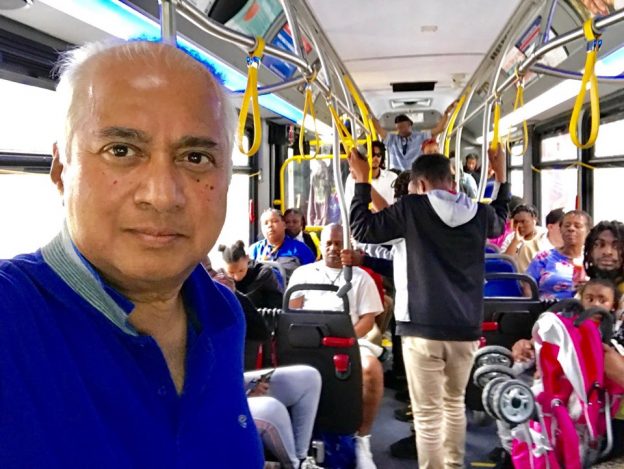
Nevertheless, I am enjoying my life in a majority Black community. On the Metro Green line train, I now watch along with the others, most of whom are Black, as most of the White folks get off at the Navy Yard, the last stop before crossing the Anacostia River, the fading, imagery racial and economic boundary.
Instead of advocating for Jim and Mike, apartment dwellers, and lower-income housing, I am acknowledging our God-given differences and advocating for pluralism, by example, every single day and every single hour. Pluralism is simply respecting the otherness of the other and accepting the God-given uniqueness of each one of us.
Note: Mike Ghouse is the author of the “American Muslim Agenda.” He is also a public speaker, interfaith wedding officiant, and the executive director of the Center for Pluralism in Washington, DC.
This message is not about taking precautions about Corona, but about dealing with our fears.
You can laugh it off at me. I have a strange fear; those of you who are single can understand it. If I were to die, I don’t want my family members and friends to come to a dirty house. So, I keep my place clean, clean sink, clean bathroom, and clean-living room, the bed is made, and things are in place, even though no one will be visiting me.
I have written down all my passwords, my insurance papers, and other papers, and have put them all in one single password and given to my kids. I want to make it easy for my family and friends. I hope you do the same.
In the case of mass deaths, don’t worry about burying me. If the county/ city has to bury us all in mass graves or other avenues, let them. I recall the stories from my grandmother how much of my family was wiped in the Spanish flu in 1918, as they bury one and come home, they have to take another one. But then, there were no bans on gatherings.
This reminds me of the communication shut down in Kashmir. I hope you feel empathy towards the Kashmiri People – all Kashmiri people, pundits and Muslims are both victims of brutality. I hope you feel their anguish and I pray empathy restored to Mr. Modi.
I also feel for millions of workers who live on daily wages and those who live in large numbers in small 10×10 huts with no sanitation and food. They are stranded. Thanks to the Sikhs, Muslims, Hindus, Christians and others who have taken it upon themselves to help fellow Indians of all hues. It was a joy to see a Hindu man was given his last rites by Muslims when the man’s relatives did not want to touch the dead, a Sikh man saved over 40 Muslims to safety, and Hindus protecting Muslims during these hard times. That is my India.
People are always good, they care. I hope the governments reflect the will of good kind-hearted people. I also hope the financial aid the Modi government has announced will go to every Indian equally to sustain through this pandemic. No one should be more privileged than the other.
I have donated all my usable body parts to medical research upon my death. If death were to come to me now, I would not resist but go in peace. I have lived my life and happy to go and blessed to live. There is an Indian song, its first two lines are the best description of living a life.
Jiyo to aise jiyo jaise sub tumhara hai Maro to aise jaise tumhara kuch bhi nahi
Live your life as if everything belongs to you, and when you die, go as if nothing belongs to you.
Each one of you must have experienced the sudden death of a loved one, and it was as if the end of the world. But you know, all wounds heal over a period of time. Of course, I have a list of things I want to do but will not sweat if I don’t. I know we have examples set by great men and women like Krishna, Zarathustra, Buddha, Mahavir, Moses, Confucius, Jesus, Muhammad, Nanak, Bahaullah, Joseph Smith, Mirza Ghulam Ahmed, Mahatma Gandhi, Mother Teresa, MLK, and a whole lot of others. They did not complete their missions to bring the entire world on one platform. God has created the world into many nations, tribes, races, ethnicities and he/she/it like it that way.
Make peace with yourselves – if you are afraid of death, clean your slate, forgive and seek forgiveness, and accept the reality and go in peace. Tie the loose ends, if you were to go, go as if you have finished your business and have nothing else to do. Go in peace my friends, Have a smile on your face, it will make it easy for the survivors. Life goes on, but make it easy for your loved ones.
May all 8 billion of us live without apprehensions and tension. Those who leave us, may them leave in peace, those who survive, may live in peace.
I feel the pain for the entire world, even though I have expressed it in terms of my surroundings.
God bless all of us,
Dr. Ghouse is a community consultant, thinker, author, newsmaker, and an interfaith wedding officiant. He is a speaker on religious freedom, Pluralism in religion, politics, society and the workplace, and offers pluralistic solutions on issues of the day. More at www.TheGhouseDiary.com